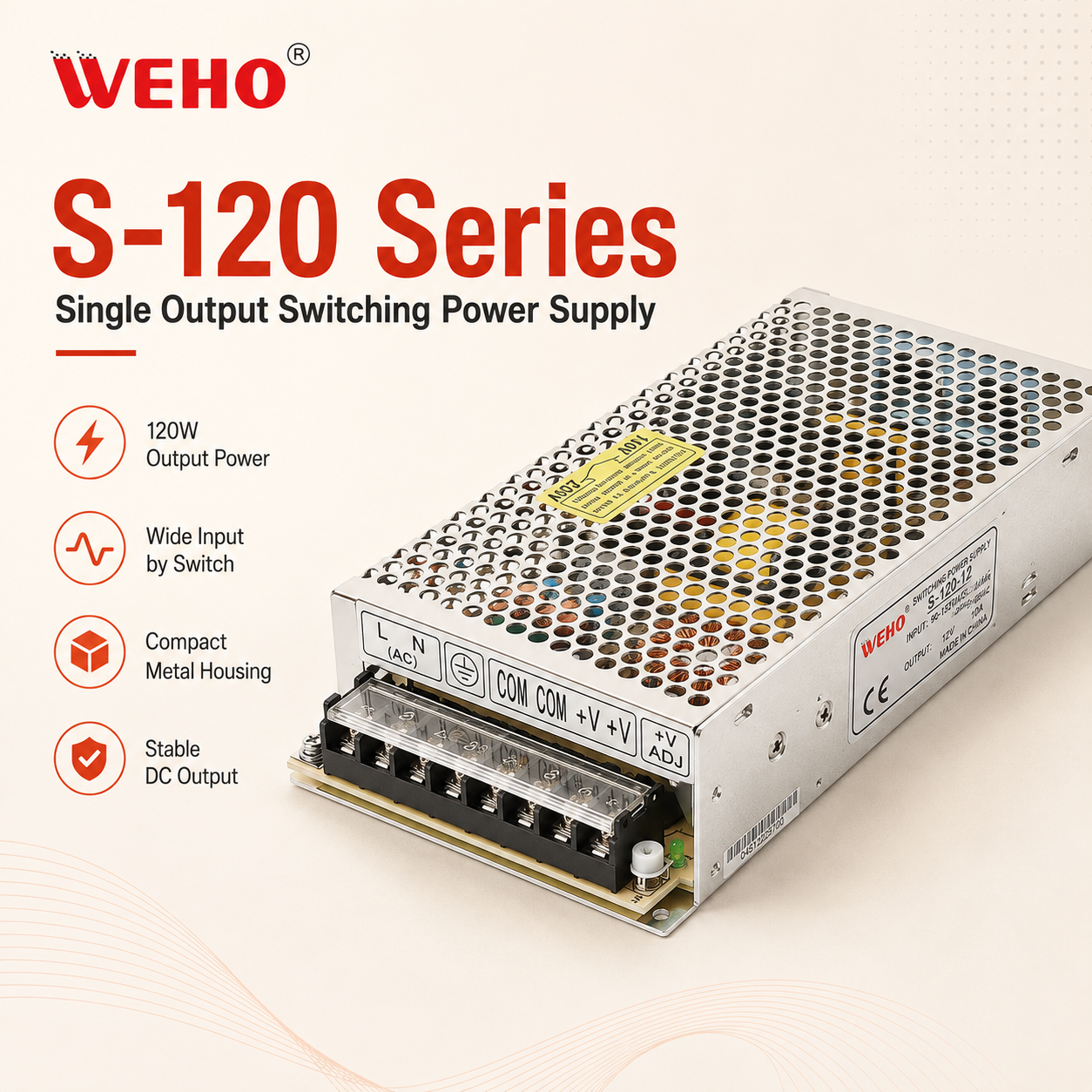
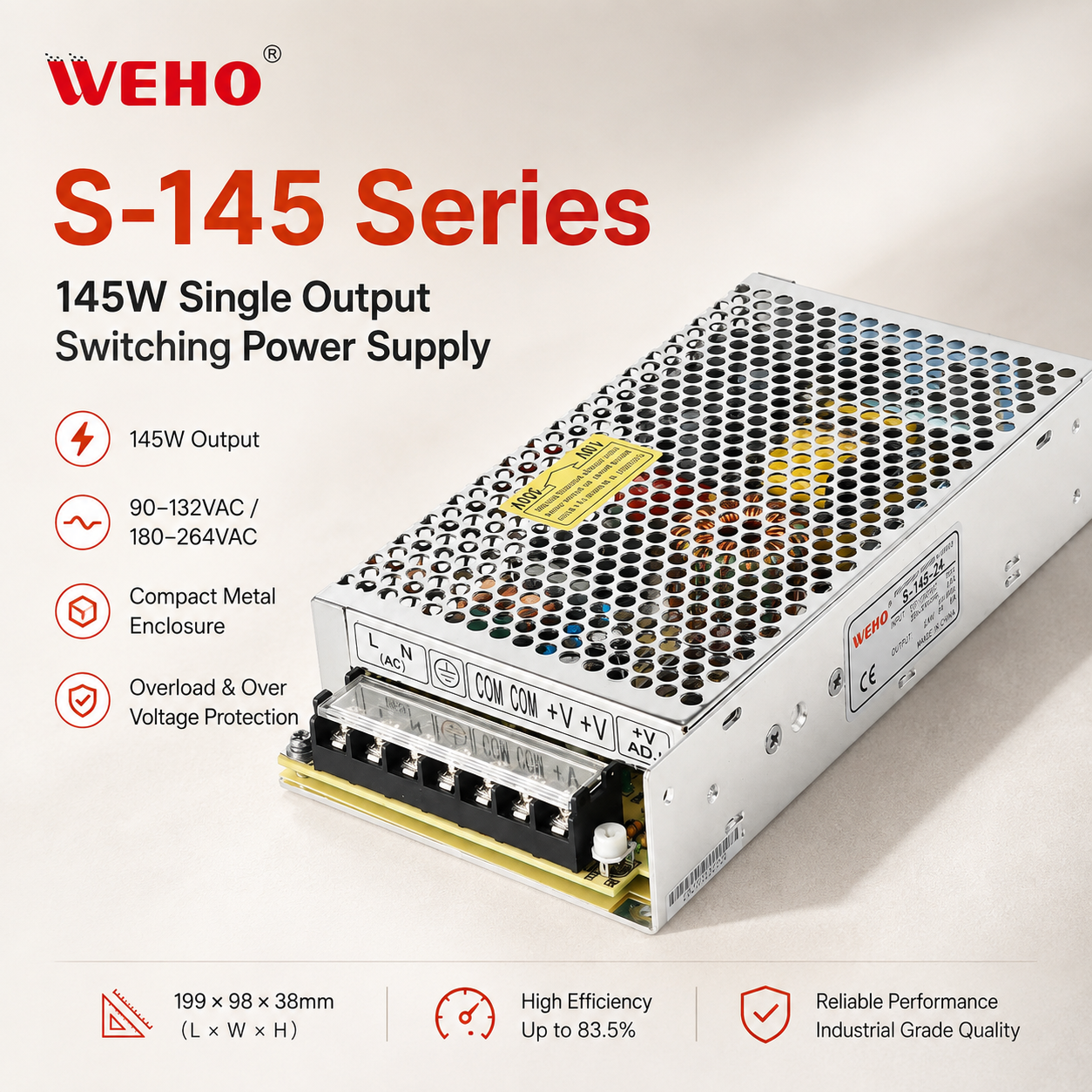
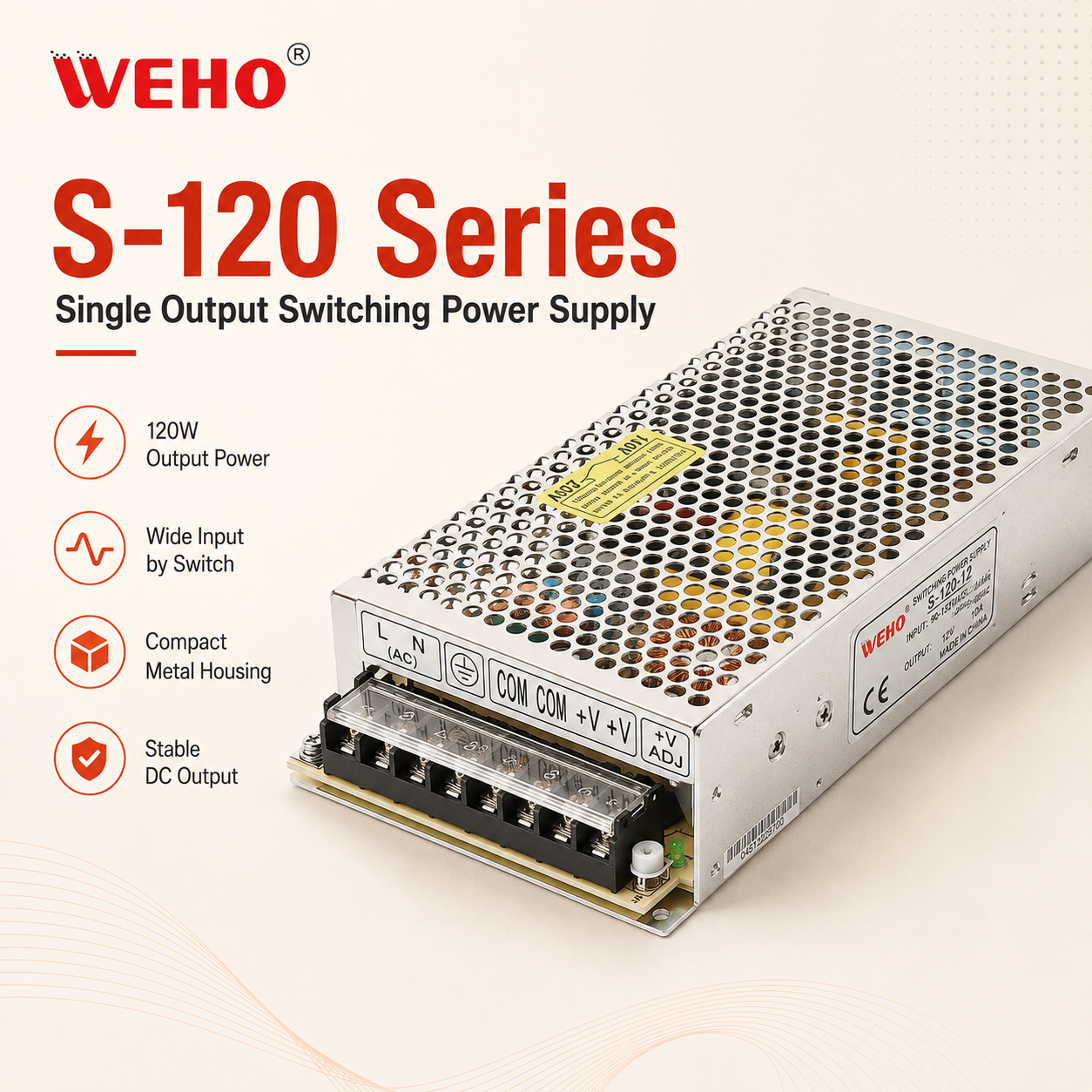
120W SMPS S-120 Multi-Voltage AC/DC Power Supply (12V-48V, 6.7A)
120W Peak Output
6.7A Low Ripple
Air Convection
Get Catalog
Our export team supports buyers in these languages:
 Deutsch
 Español
 Français
 Português
 Italiano
 Русский
 العربية
 Türkçe
Our industrial switched-mode power supplies (SMPS) are built with premium imported electronic components, solid capacitors, and multi-stage electromagnetic filters to protect mission-critical operations.
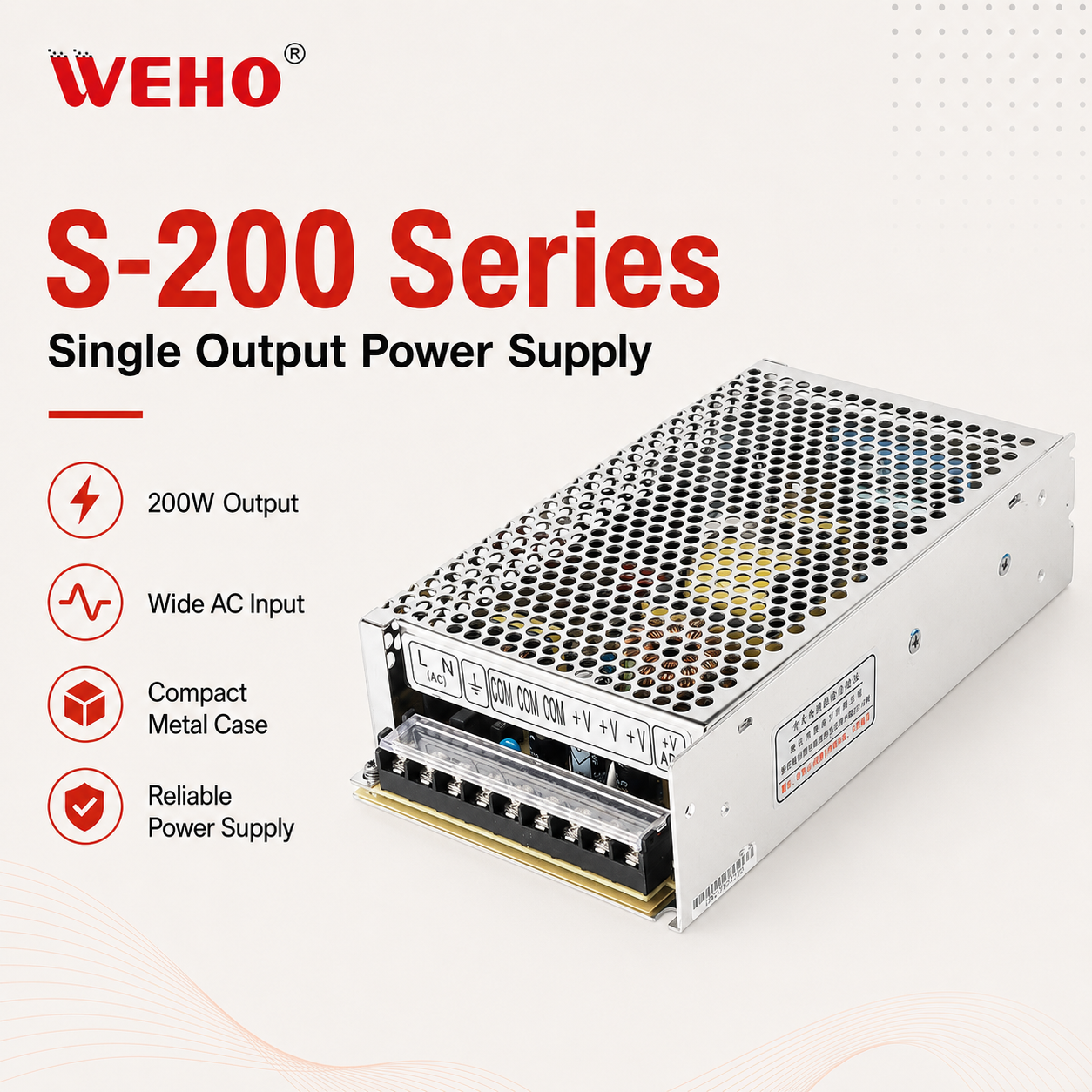
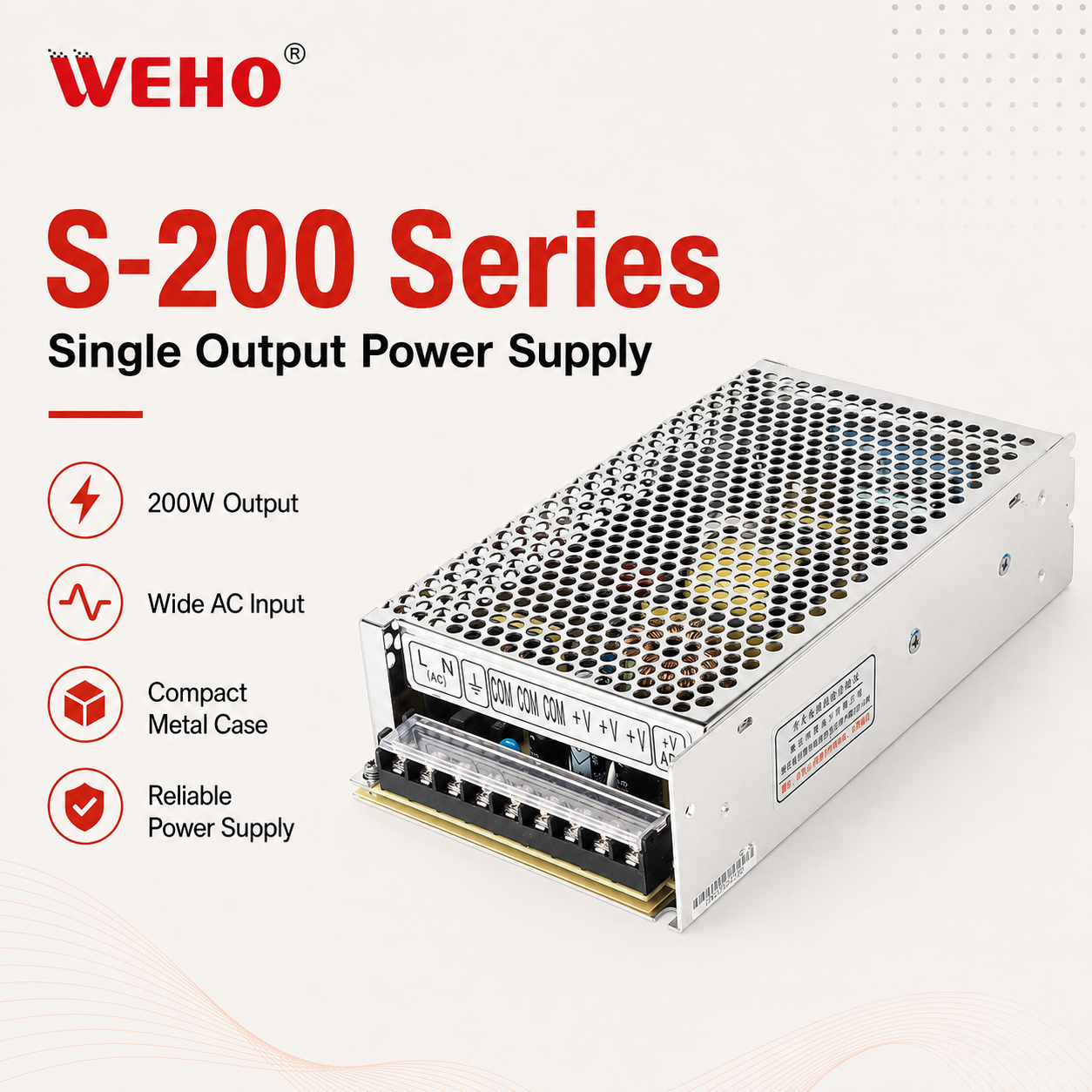
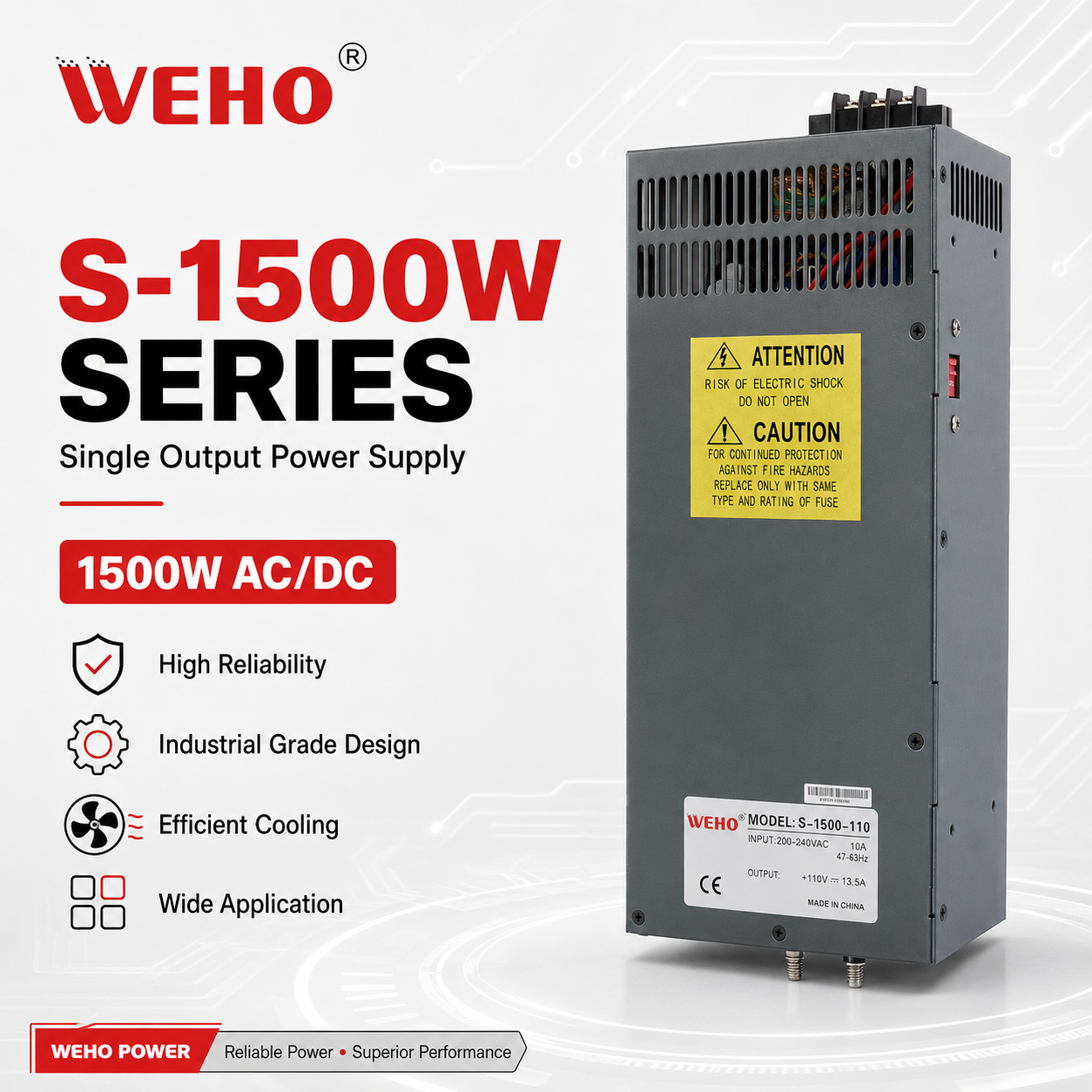
As one of China's seasoned industrial switching power supply manufacturers and global exporters based in Zhejiang, our production matrix spans over 10,000 square meters of modernized industrial infrastructure. Unlike pure export intermediaries, our manufacturing capability is audited and verified directly on-site by SGS and international accreditation bodies. With more than 10 dedicated automated and semi-automated production lines, our assembly ecosystem integrates precision SMT placement, automatic lead component insertion, automated double liquid potting, and precision wave soldering.
Reliability in an industrial switched-mode power supply is determined well before assembly: it originates in deep supply-chain stability and stringent component validation. Zhejiang Harlon Electronic maintains direct supplier frameworks with 31 verified component manufacturers, securing batches of high-grade copper wire transformers, low-ESR capacitors, and robust dynamic power switching FETs. Every model running through our floor—from low-profile 10W sensor supplies to 3000W kilowatt-scale rack units—undergoes continuous, 100% full-load aging and high-temperature thermal stress burn-in to aggressively weed out infant mortality defects prior to export container packaging.
Information Gain Benchmark: Our testing facility contains self-owned advanced EMC chambers, EMI spectral receivers, and 6kV lightning surge simulation generators—enabling custom OEM designs to validate compliance with EN 55032 Class B without recurring third-party delays.
Every single PCBA is assigned a traceable batch identity code tracking automated wave soldering profiles, thermal curing cycles, and component source lots.
Integrated solid-state topologies guarantee automatic recovery from over-voltage, short-circuit, over-current, and critical enclosure over-temperature states.
Tailored topologies covering unique rail voltages (such as 36V or 68V), conformal coatings for coastal dampness, or custom terminal footprints to match legacy enclosures.
Industrial procurement managers and automation system integrators are navigating significant structural shifts in the global power supply supply chain. Previously, selection criteria were overwhelmingly anchored to unit cost (Watt-per-dollar calculations). Today, Total Cost of Ownership (TCO) models—dominated by thermal efficiency losses, downtime maintenance, and regulatory carbon compliance—govern tier-1 sourcing strategies.
| Evaluation Parameter | Legacy Sourcing Paradigm | Next-Generation Procurement Standard | Operational Impact |
|---|---|---|---|
| Power Semiconductor Topology | Standard Silicon (Si) MOSFETs | Gallium Nitride (GaN) & Silicon Carbide (SiC) | Up to 40% reduction in package volume and thermal output |
| Thermal Architecture | Continuous acoustic fan operation | Smart conduction cooling with variable fan logic | Dramatically elevated MTBF; eliminated dust ingestion hazards |
| System Power Factor (PFC) | Passive PFC or Non-PFC (>0.75) | Active Power Factor Correction (>0.98 at full load) | Compliance with global grid distortion caps; reduced line current |
| Diagnostic Capabilities | Analog DC OK LED indicator | Bidirectional digital bus integration (PMBus/Modbus) | Real-time thermal monitoring and predictive failure analytics |
1. The Ascent of High-Frequency Wide-Bandgap Devices (GaN & SiC): As industrial equipment enclosures shrink, power density requirements are frequently passing the threshold of 30W/in³. Standard silicon switching designs are limited by junction temperature thresholds and switching losses. Modern high-power SMPS platforms (such as our higher-output S-1500 and DIN-rail systems) increasingly leverage fast-switching topology innovations to maintain conversion efficiencies above 93%, directly slashing factory electricity bills and cooling overheads.
2. Stringent Energy Standards and Idle Loss Penalties: International mandates—including EU ErP Lot 7 and US DoE Level VI standards—now scrutinize no-load standby power consumption. Forward-thinking buyers are systematically disqualifying industrial power units that consume more than 0.5W in standby mode, prompting manufacturers to re-engineer auxiliary standby power transformers and secondary rectification circuitry.
3. Environmental Ruggedization as Standard: Industrial automation is steadily expanding into extreme sectors: exterior EV battery chargers, high-vibration CNC multi-axis cutters, and decentralized maritime monitoring cabinets. Power supplies are no longer expected to exist merely in dry control rooms. Procuring teams routinely demand Class I / Div 2 chemical immunity, operating temperature spans from -30°C to +70°C with linear derating, and high-spec conformal coatings capable of passing salt-spray exposure assessments.
Clear, direct insights addressing logistical, regulatory, and engineering concerns for international power electronics buyers.
Discuss your technical specifications with our engineering team, request validation test reports, or download our complete industrial AC/DC catalog.
Get Catalog