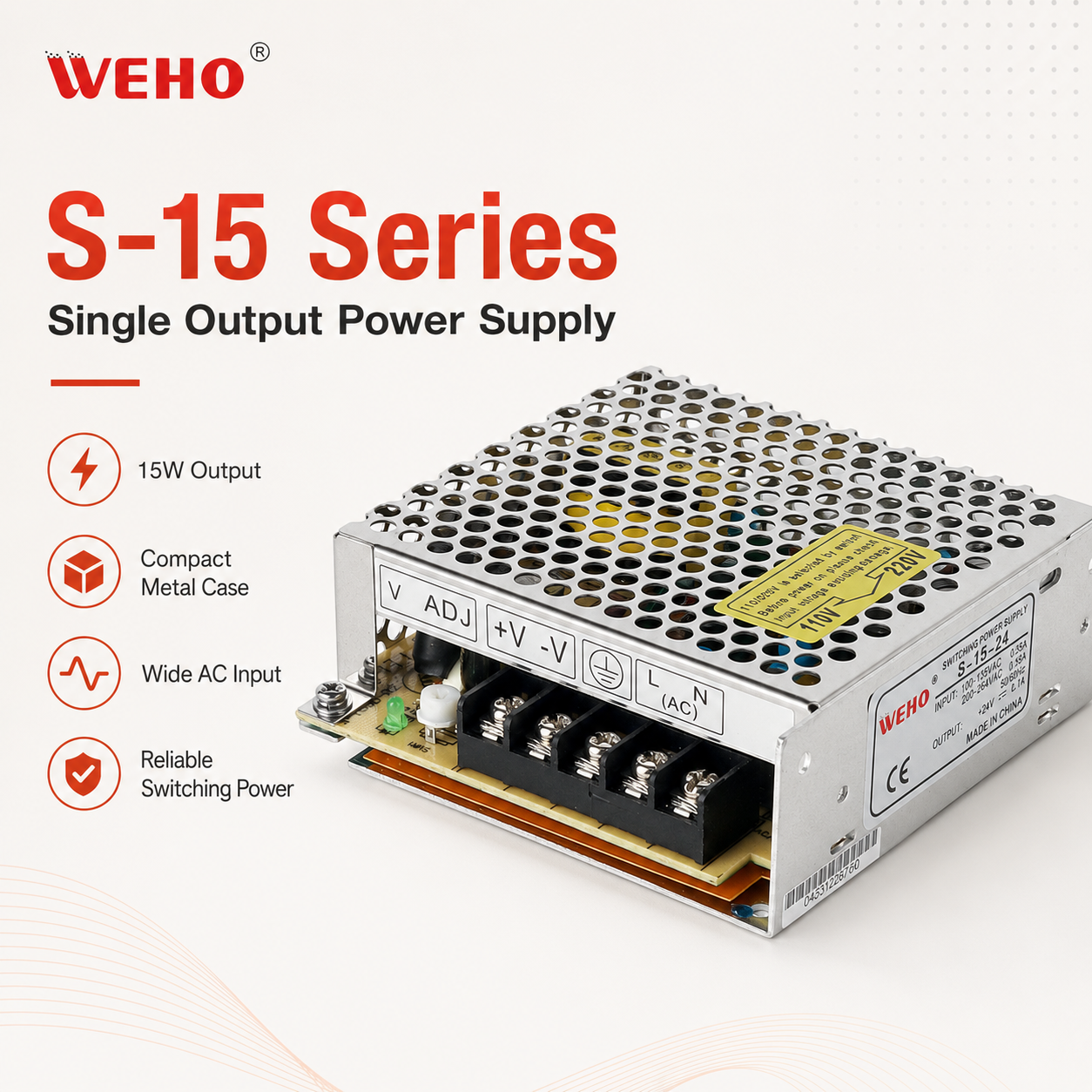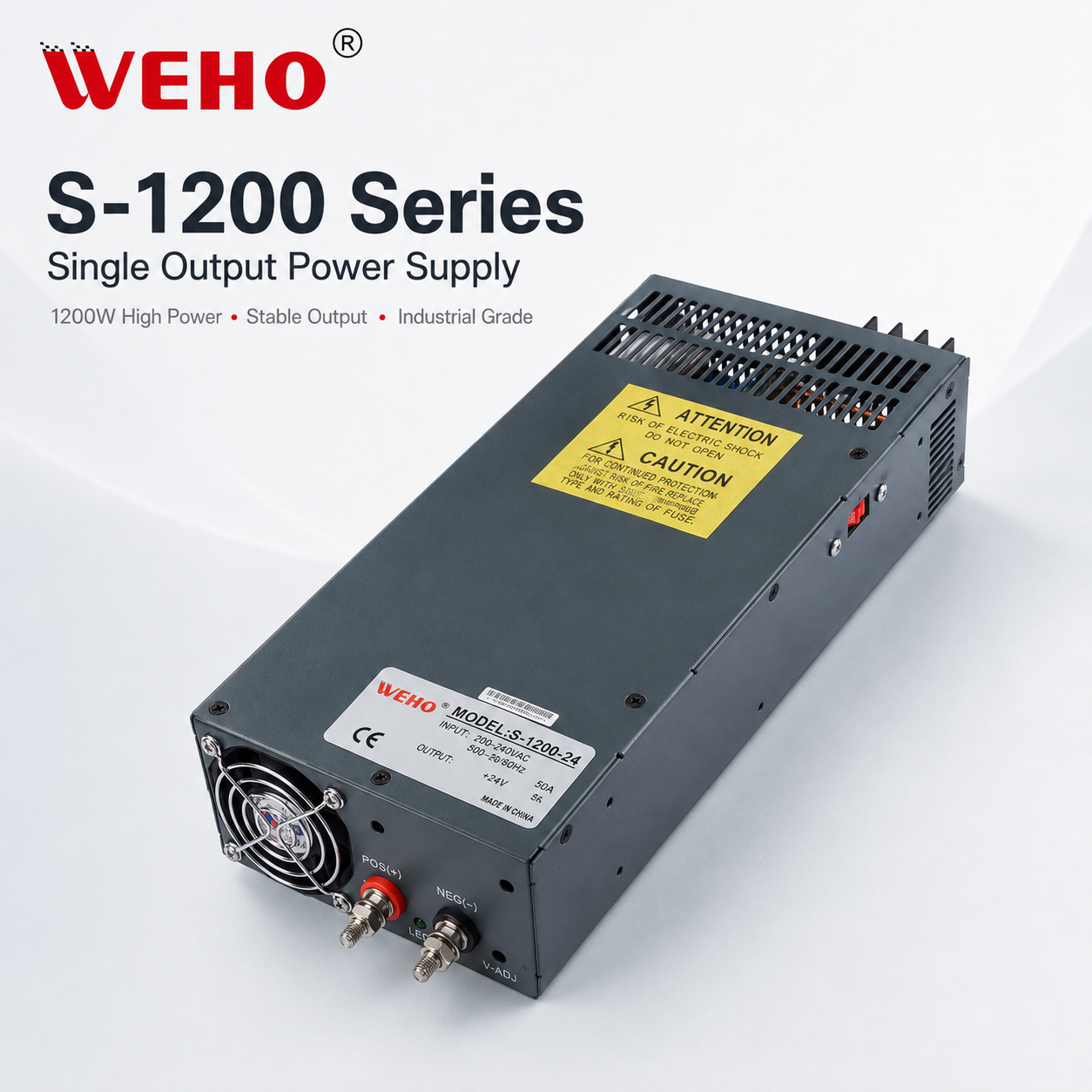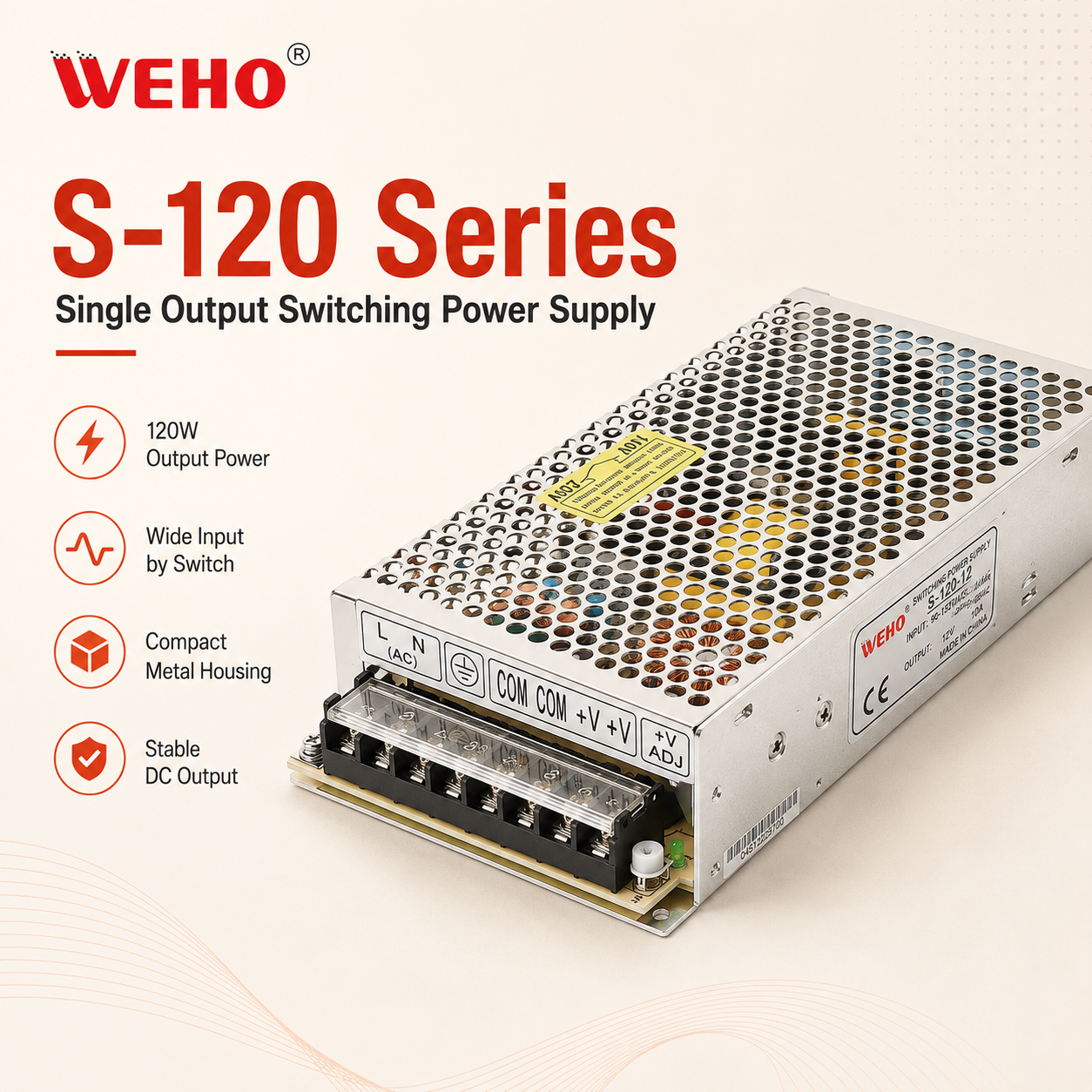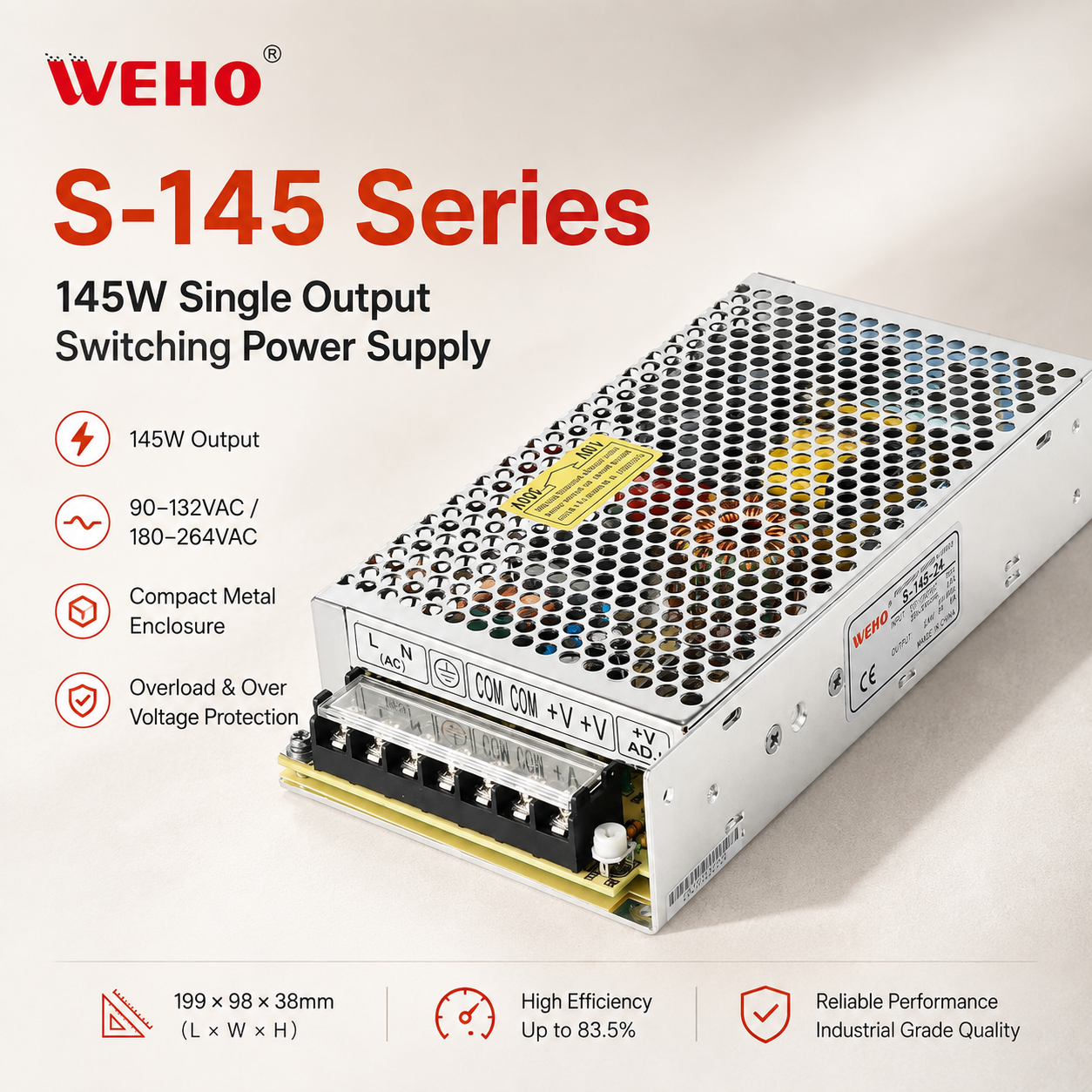
China Wholesale Buck Converter Manufacturers & Exporter

Industrial-Grade High-Efficiency DC-DC Step-Down & Enclosed Power Supplies: Precision Regulators, SMT Automated Architecture, and Global OEM/ODM Technical Solutions

19+
Years Manufacturing Experience
10,000m²
Automated Factory Facility
100%
Full Load Burn-In Testing
ISO9001
SGS On-Site Audited Quality

Engineered DC-DC Step-Down & Industrial Power Solutions

Explore our heavy-duty switching regulators, high-amperage enclosed power converters, and precision DC voltage conditioning units built for worldwide industrial deployments.

Industrial Engineering White Paper: Specifying Buck Converters & SMPS

A comprehensive technical analysis for system integrators, hardware engineers, and procurement directors navigating wholesale component manufacturing in China.

Topology & Efficiency

Modern buck converters rely on synchronous rectification rather than conventional freewheeling Schottky diodes. By replacing diodes with high-performance N-Channel MOSFETs, conduction losses drop substantially ($P_{loss} = I_{RMS}^2 \times R_{DS(on)}$), boosting efficiency ratings past 94% across variable loads.

  • Significantly minimized thermal footprint
  • Optimized power densities in restricted metal enclosures
  • Minimized ripple noise via low-ESR solid ceramic capacitance

Transient Response & EMC

Industrial machinery generates aggressive line voltage perturbations. Our switching controllers incorporate adaptive constant on-time (COT) control engines that stabilize output rail drops within microseconds during extreme step-load transitions, maintaining compliance under heavy induction spikes.

  • Integrated differential and common-mode filtering stages
  • Conducted emissions conforming to EN55032 (CISPR32) Class B
  • Surge withstand immunity rating tested up to 2kV–4kV

Thermal Derating & Safety

Industrial deployment demands relentless resilience across extreme environments. Our modules utilize aerospace-grade aluminum chassis with optimized heatsink profiles, guaranteeing non-derating performance between -20°C and +50°C, and graceful derating up to +70°C ambient temperatures.

  • Hiccup-mode self-recovering short circuit protection
  • Active thermal tracking shutdown prevents silicon burnout
  • 100% full-load aging tests performed at elevated temperatures
Converter Category Input Range ($V_{in}$) Regulated Output Peak Efficiency Target Industrial Application Compliance Architecture
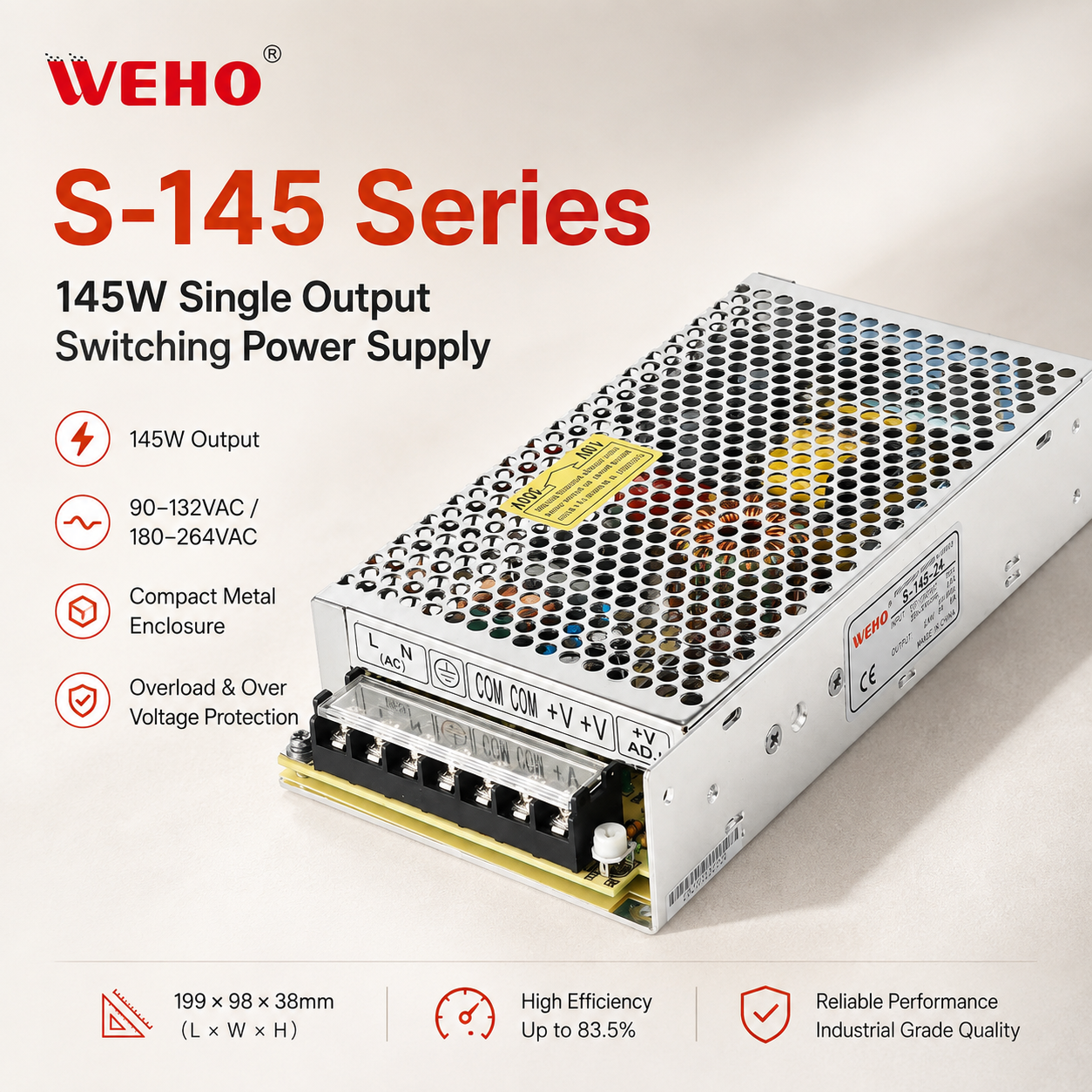
Compact Auxiliary SMPS 85–264V AC / 120–370V DC 12V / 15V / 24V DC 86% – 88% PLCs, Sensors, Access Control, IoT Gateways CE, RoHS, FCC Class B
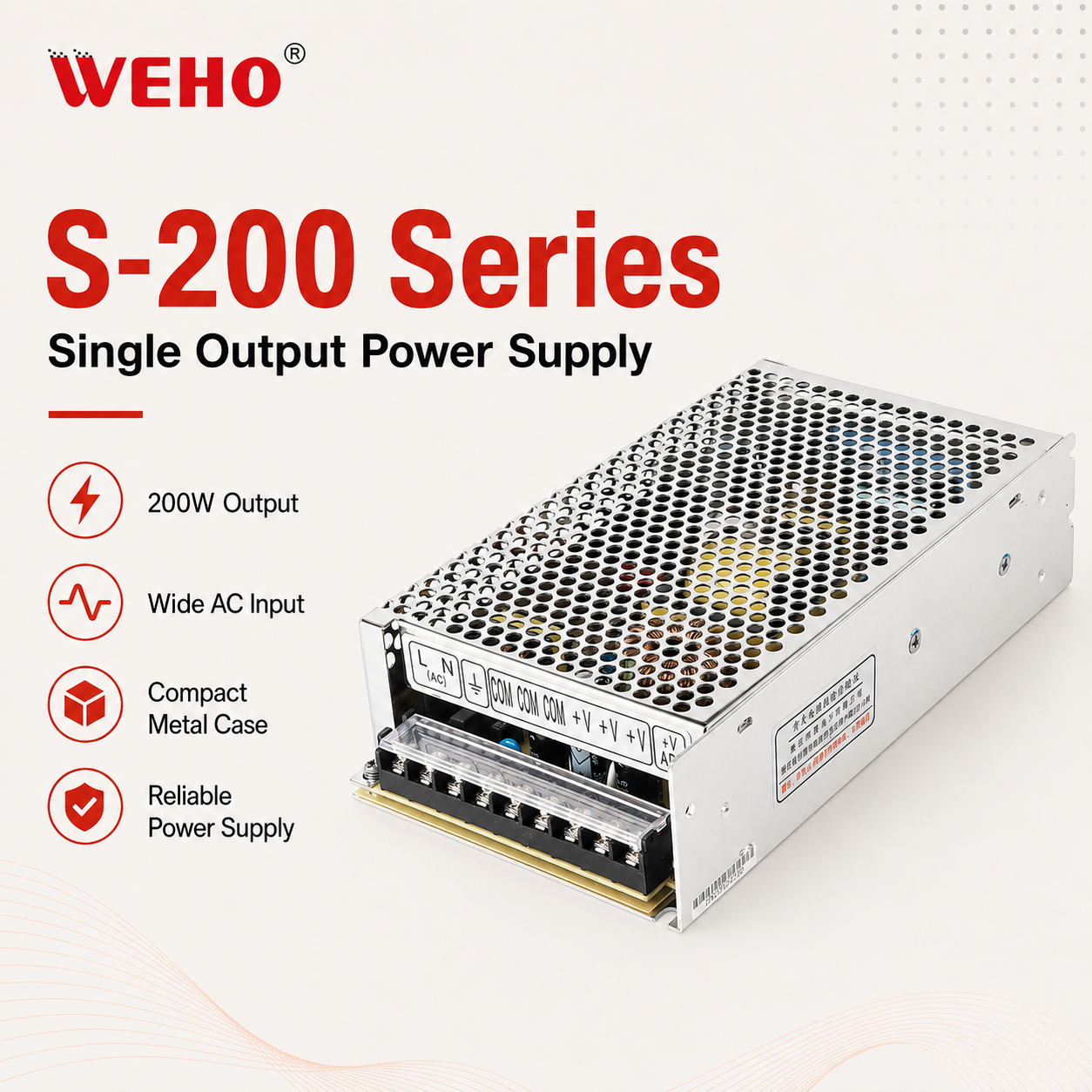
Mid-Power Enclosed Buck 176–264V AC (Selectable) 24V / 36V / 48V DC 88% – 91% CNC Motion, Stepper Drives, 3D Printers UL62368-1, EN61558
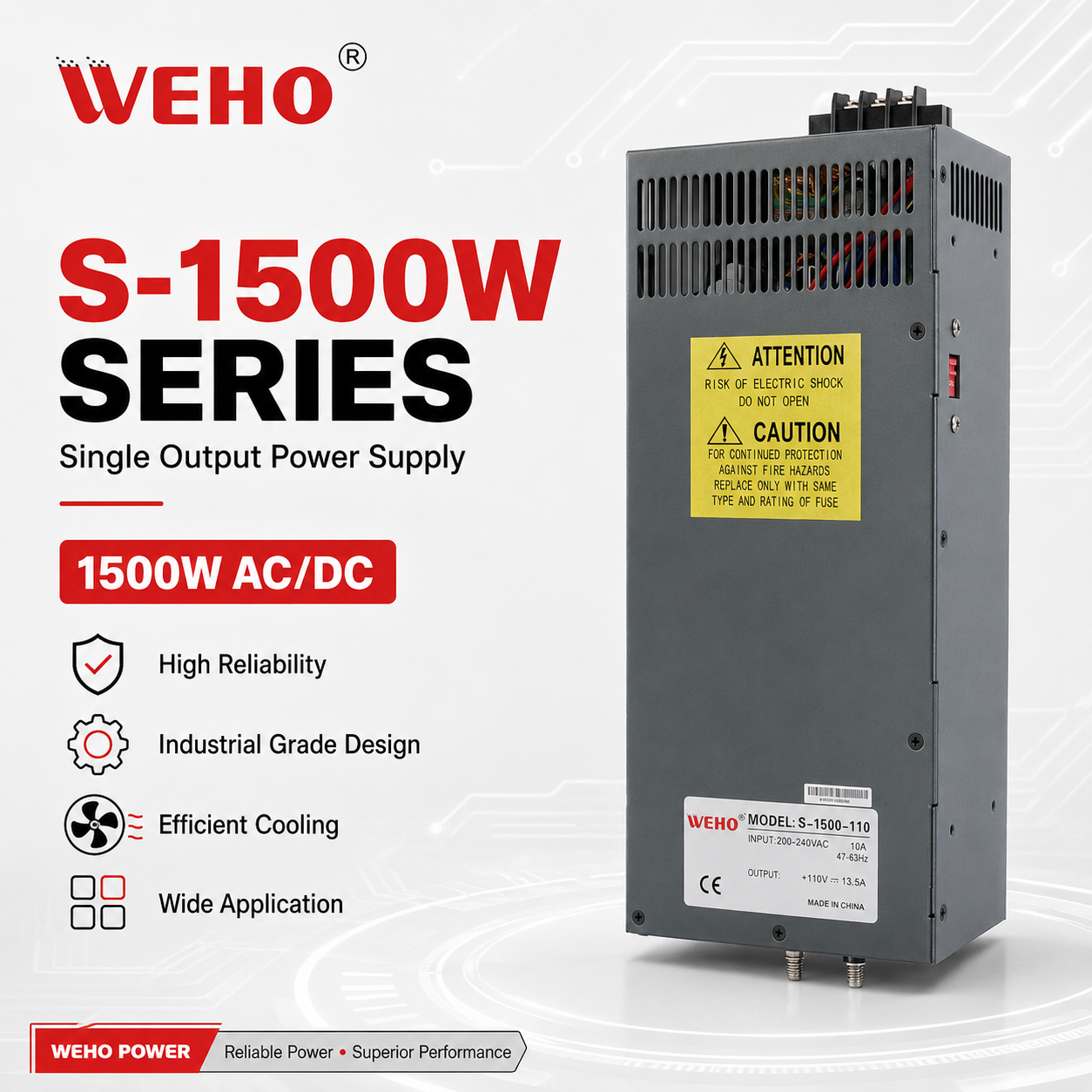
High-Current Industrial Unit 180–260V AC / 3-Phase Opt. 12V / 24V / 48V (Up to 100A) 90% – 93% Battery Charging, Telecom, Large Laser Cutters Industrial Heavy EMC, CE
Synchronous DC-DC Module 9–36V DC / 18–75V DC 3.3V / 5V / 12V / 24V DC 92% – 96% Robotics, Automated Guided Vehicles (AGV) ISO7637-2, Shock & Vibration

Future Procurement Trends in the Power Conversion Sector

Strategic procurement directors must plan component lifecycles around evolving international regulatory mandates, component availability, and shifting manufacturing paradigms.

Wide Bandgap: GaN & SiC Integration

The industry is transitioning toward Gallium Nitride (GaN) and Silicon Carbide (SiC) semiconductors. These wide bandgap substrates enable switching frequencies beyond 500kHz, allowing inductive and capacitive component sizes to shrink by over 40% while slashing conversion losses.

Digital PMBus & Predictive Maintenance

Fixed-output power supplies are increasingly replaced by smart programmable units. Utilizing I2C, CAN, or PMBus communications, system controllers can now continuously monitor input current, operational temperature, and output fluctuations to predict component failure before downtime occurs.

Strict Eco-Design & Standby Standards

Global regulatory bodies (such as EU Ecodesign and US DoE Level VI) are tightening no-load power consumption thresholds below 0.15W. Wholesale buyers must partner with manufacturers whose circuit architectures support low-frequency burst mode operation during idle system states.

The Roadmap of Industrial Step-Down Converters: 2026 and Beyond

A technological transition from passive assembly to active silicon optimization and intelligent power density.

The development vector of switching power units and DC step-down converters centers around three critical performance metrics: gravimetric power density ($W/kg$), volumetric efficiency ($W/cm^3$), and electromagnetic quietness. Conventional single-layer board designs with bulky iron-core transformers are being superseded by planar transformer configurations and multi-layer PCBs with integrated thermal vias.

Furthermore, component-level integration has enabled buck regulator modules to feature integrated inductors and passive arrays inside unified micro-molded packages. For industrial high-power chassis units (1200W–3000W), active Power Factor Correction (PFC) stages running interleaved topology are becoming standard to preserve electrical network stability and achieve harmonic mitigation compliance under IEC 61000-3-2 standards.

Enterprise Strengths: Zhejiang Harlon Electronic Co., Ltd.

Combining nearly two decades of precision power electronics design with scalable, automated high-throughput production lines.

10,000m² Verified Facility

Headquartered in Wenzhou, Zhejiang, our industrial plant comprises over 10 automated production lines, fully certified by SGS on-site audits and governed under an uncompromising ISO 9001 quality management framework.

Advanced Automated Production

Equipped with high-precision SMT placement machines, automated component inserting machinery, dual-wave soldering stations, silicone glue potting dispensers, and automated robotic packaging systems to eliminate human assembly variances.

Dedicated R&D In-House Lab

Our chief R&D engineer brings 30 years of independent circuit engineering expertise. Our lab houses EMI test receivers, shielding rooms, lightning surge generators, high-voltage hi-pot testers, and environmental thermal chambers.

Frequently Asked Questions for Wholesale Buyers & Importers

Everything you need to know about lead times, custom engineering parameters, export certifications, and testing procedures.

What is the difference between an AC-DC SMPS and a true DC-DC Buck Converter?
An AC-DC Switching Power Supply (SMPS) rectifies high-voltage alternating mains current (110V/220V AC) down to a stable, isolated direct current voltage (such as 12V, 24V, or 48V DC) via high-frequency transformer isolation. A DC-DC buck converter accepts an existing direct current bus (such as 24V or 48V DC from an industrial supply or battery bank) and steps it down efficiently to a lower regulated direct current voltage (e.g., 5V or 12V DC) without requiring line-frequency isolation transformers. We engineer and manufacture both categories.
How does Harlon ensure unit reliability across large wholesale batch orders?
Reliability is anchored in our 9-step quality control protocol: 100% incoming inspection of raw components (ICs, electrolytic capacitors, and ferrite cores), automated SMT assembly, automated insertion, computerized wave soldering, precision potentiometer voltage calibration, automated chassis assembly, 100% full-load high-temperature burn-in testing, comprehensive electrical function testing, and moisture-barrier export packaging.
Can Harlon accommodate custom output voltages and OEM buyer labeling?
Yes. We offer complete OEM and ODM customization backed by 18 years of direct export experience. We can adjust output voltage rails (e.g., non-standard 18V, 36V, or multi-tap rails), implement tailored connector terminal blocks, apply custom silkscreen branding, provide client-specified metal chassis finishes, and design custom retail or industrial packaging.
What protection mechanisms are integrated into your industrial power units?
Every unit features multi-layer active and passive safeguards: Over-Current Protection (OCP) with constant current limiting or hiccup auto-recovery; Over-Voltage Protection (OVP) utilizing zener-clamp feedback; Short-Circuit Protection (SCP); and Over-Temperature Protection (OTP) through integrated thermistors that safely shut down switching activity if heatsink thresholds are breached.
What are your typical minimum order quantities (MOQ) and production lead times?
For standard catalog models, our MOQ starts at flexible sample quantities for engineering evaluation, scaling to 100+ units for standard production batches. Standard production lead times run between 15 to 25 business days depending on order volume and component customization requirements. Expedited pilot run slots are available upon technical review.

Request Direct Factory Quotations & Engineering Datasheets

Connect directly with our engineering team in Zhejiang, China. Inquire about custom voltage configurations, wholesale tiered volume pricing, and sample dispatch.

Get Catalog