Balancing Baltic Climate Extremes with High-Efficiency Solid-State Drive Topology
Estonia’s geographical positioning in Northern Europe presents an unforgiving environment for solid-state lighting installations. Operating temperatures in winter routinely plumb below -20°C to -30°C in inland hubs such as Tartu and Viljandi, before oscillating toward humid summer conditions across coastal harbors in Tallinn, Pärnu, and Saaremaa. For constant voltage LED drivers, thermal cycling presents catastrophic operational hazards if components are inadequately specified.
Under conventional switched-mode architectures, standard aluminum electrolytic capacitors suffer severe electrolyte gelatinization at temperatures under -10°C, precipitating massive Equivalent Series Resistance (ESR) surges. This causes critical DC ripple spikes, visible photometric flickering, and premature driver lockouts. Zhejiang Harlon Electronic Co., Ltd. resolves these systemic vulnerabilities by utilizing ultra-low ESR solid capacitors rated down to -40°C alongside high-flux magnetic cores.
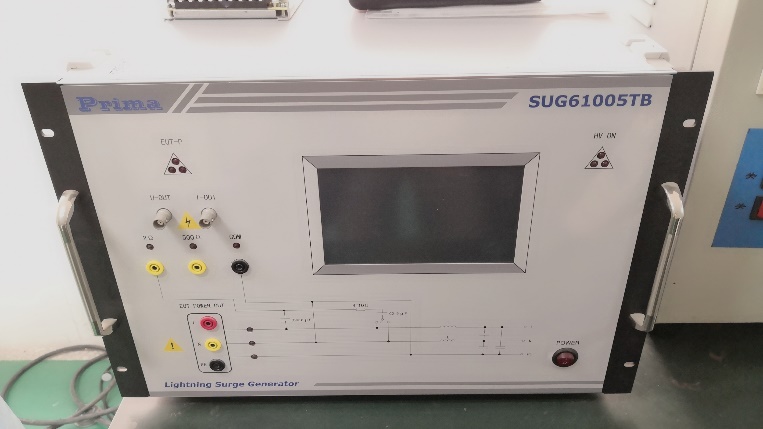
Additionally, with Estonia leading the global curve in municipal digitalization and automated grid balancing, drivers must exhibit exceptional immunity to harmonic feedback, rapid transient load switching, and severe line surges triggered by northern coastal lightning storms.
 Deutsch
 Español
 Français
 Português
 Italiano
 Русский
 العربية
 Türkçe