Tested under rigorous 100% high-temperature thermal loads and calibrated for precise line regulation across automated manufacturing, instrumentation, and sub-rack assemblies.
A comprehensive analysis of thermal derating, electromagnetic compatibility, and isolation standards within Canton Bern’s precision machinery, medtech, and infrastructure sectors.
The industrial landscape across the Canton of Bern—spanning from precision micro-manufacturing clusters in the Bernese Jura (Biel/Bienne, Saint-Imier) to biomedical engineering hubs around Bern city and dynamic railway transit corridors—demands an uncompromising tier of power conversion integrity. While enclosed power supplies provide mechanical shielding, open frame power supplies are increasingly engineered into contemporary embedded architectures to optimize volumetric power density, mitigate acoustic footprint by enabling convective cooling, and allow modular thermal management directly through the host machinery’s chassis.
When engineering open frame power supplies for systems destined for deployment in Bern, procurement teams cannot rely on generic commercial switch-mode supplies. Equipment integrated into precision robotics, CNC electrical discharge machinery (EDM), laser calibration tables, and diagnostic lab equipment faces strict electromagnetic compliance (EMC) governed by European harmonized standards (EN 55032 Class B for conducted emissions) as well as Swiss Federal Electricity Commission (ElCom) stability metrics. Because an open frame supply lacks a Faraday cage metal shell, electromagnetic suppression relies strictly on intelligent multi-stage input filtering, optimized PCB ground planes, and transformer inter-winding shield designs.
Review how mechanical configuration dictates airflow dynamics, leakage currents, and Mean Time Between Failures (MTBF) under demanding thermal profiles in Swiss cleanroom and factory automation installations:
| Design Parameter | Standard Enclosed Power Supply | Engineered Open Frame Architecture (Harlon) | Strategic Benefit for Bern OEM Integrators |
|---|---|---|---|
| Thermal Dissipation | Restricted airflow slot venting or dedicated internal micro-fan | Direct convective flow & cold-plate chassis heat-sinking | Acoustically silent operation; eliminated mechanical fan failure risk in medical & lab environments. |
| Z-Axis Profile (Height) | Typically 38 mm – 60 mm with casing structure | Ultra-compact low profile down to 25 mm – 30 mm | Enables 1U sub-rack enclosure mounting in modular telecom, PLC, and compact CNC controllers. |
| Leakage Current | Often > 0.75mA to 1.5mA through grounded casing | Ultra-low leakage < 100μA – 300μA design options | Meets touch-safe parameters critical for Bern medtech and analytical sensing instrumentation. |
| EMC / Immunity Strategy | Shielded primarily by perforated stamped steel/aluminum casing | Integrated common-mode chokes & primary-secondary shield foils | Passed EN 55032 Class B without external add-on filter stages, minimizing BOM cost. |
| Component Redundancy | Standard industrial electrolytic capacitors (2,000–5,000 hrs) | Imported 105°C long-life capacitors & 100% full-load aging | Guarantees 50,000+ operating hours under harsh ambient cycle variations across Alpine transit networks. |
From high-altitude transportation corridors to precision micromechanics and smart energy matrices, our power modules support demanding localized workflows.
The Bernese Jura is globally renowned for micromechanical excellence and horological component tooling. Our open-frame and modular DC units provide ripple-free 12V and 24V bus voltages (under 80mVp-p) required to eliminate electrical noise in multi-axis micro-milling spindles and automated optical inspection (AOI) benches.
Centered around the medical technology cluster in Bern, diagnostic fluid analyzers, surgical robotics, and incubator controls require stable, low-leakage open frame switching platforms. Rigorous reinforced dielectric isolation (up to 3000VAC I/P-O/P) ensures total user isolation and reliable diagnostic readouts.
Bern acts as the central hub of Swiss federal transit (SBB). Open frame and DIN rail converters power trackside telemetry, tunnel ventilation sensors, and passenger signaling infrastructure, delivering high surge suppression, wide DC input options, and resilience against mechanical vibration.
Aligned with Canton Bern’s Energy Strategy 2050, commercial battery storage systems (BESS), solar inverter telemetry, and EV charging station controllers utilize our DC-DC converters and high-efficiency switching units to maintain continuous sub-system monitoring under severe thermal cycles.
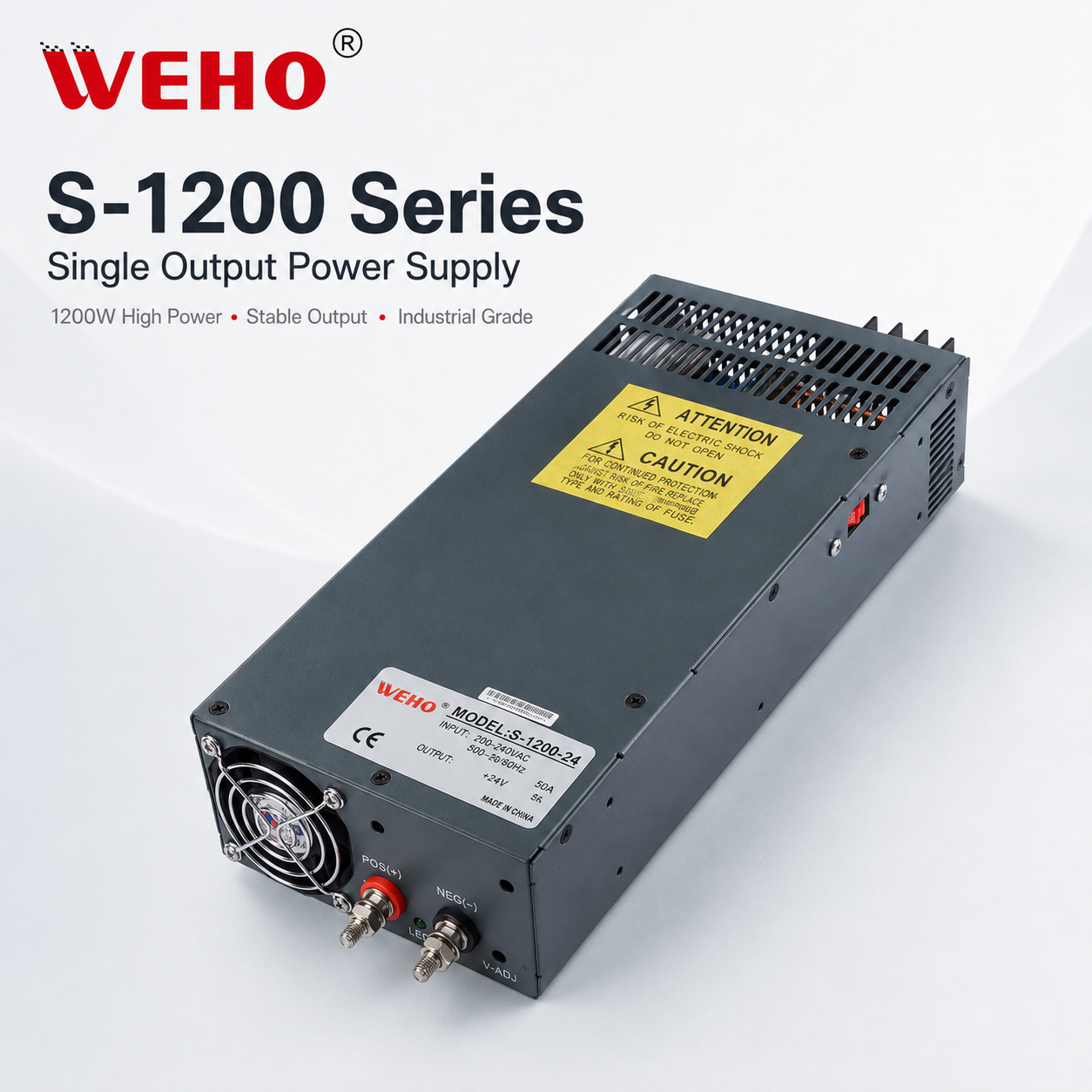
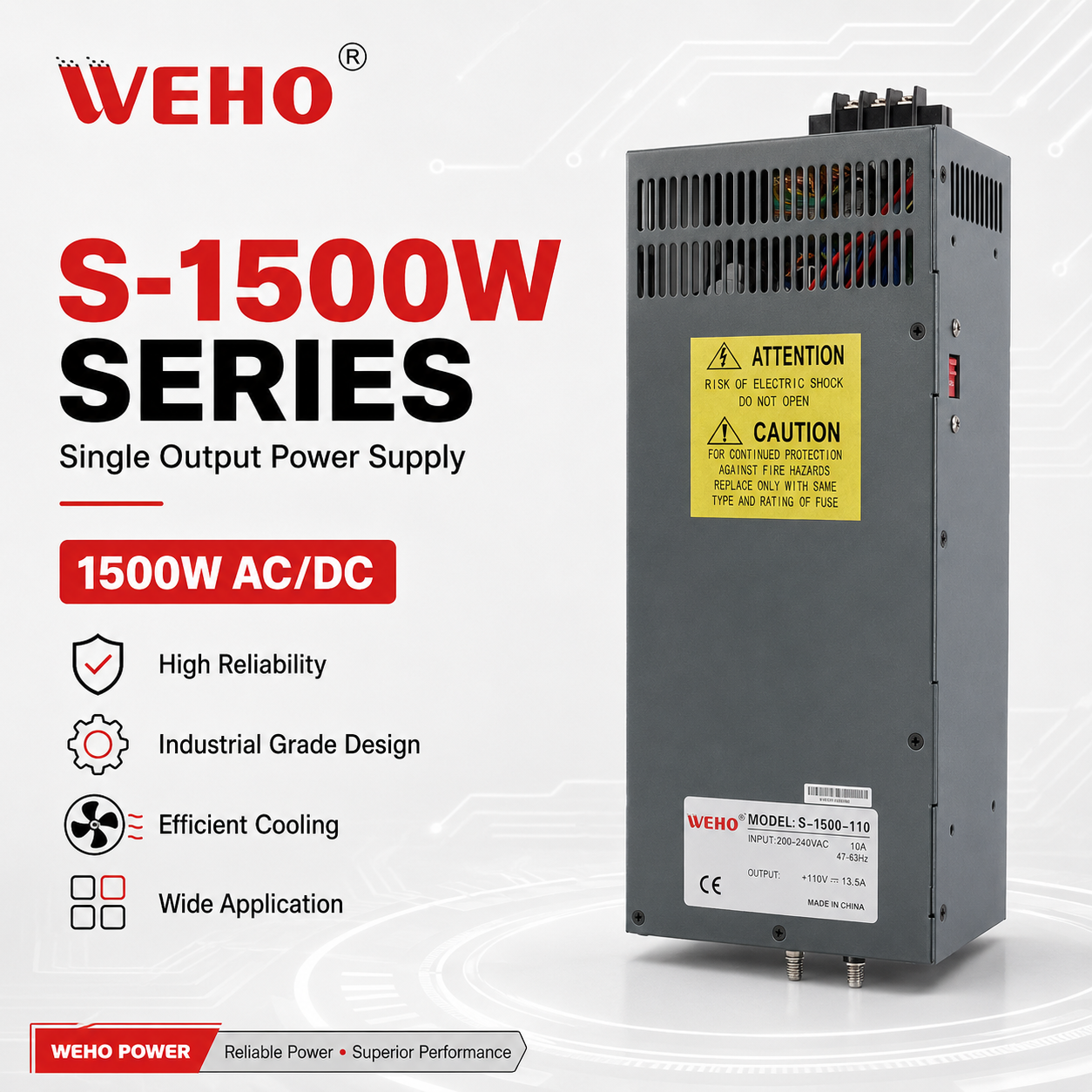
In modern industrial facilities across Burgdorf, Thun, and Langenthal, machine builders install our high-power SMPS (up to 1500W and 3000W) to handle instantaneous inrush current surges from servo drives, stepper actuators, and pneumatic valving arrays without voltage sagging.
Commercial centers and institutional headquarters in Bern utilize our continuous-duty 12V/24V/48V SMPS platforms to power intelligent HVAC building automation systems, enterprise access control gateways, and high-definition IP camera networks requiring zero downtime.
How regulatory shifts, efficiency requirements, and decentralization are reshaping electrical specification sheets for Swiss engineers.
The transition toward Gallium Nitride (GaN) and Silicon Carbide (SiC) switches enables smaller transformer cores, driving power density beyond 25W/in³ while minimizing thermal waste within sealed machine frames.
Swiss procurement regulations increasingly evaluate product lifecycle impacts. Easily demountable open-frame layouts with recyclable aluminum heat plates and RoHS-compliant soldering lower total carbon tax burdens.
Integration of PMBus, I2C, or CAN protocols onto embedded open frame supplies allows real-time current logging, thermal monitoring, and predictive failure alerting before field breakdowns occur.
With widespread industrial heat pumps and variable-frequency drives affecting European grid harmonics, Active Power Factor Correction (PFC > 0.98) has become a mandatory procurement baseline across Switzerland.
Combining 19 years of power electronics development, SGS-audited factory operations, and an in-house laboratory suite that eliminates prototype guesswork.
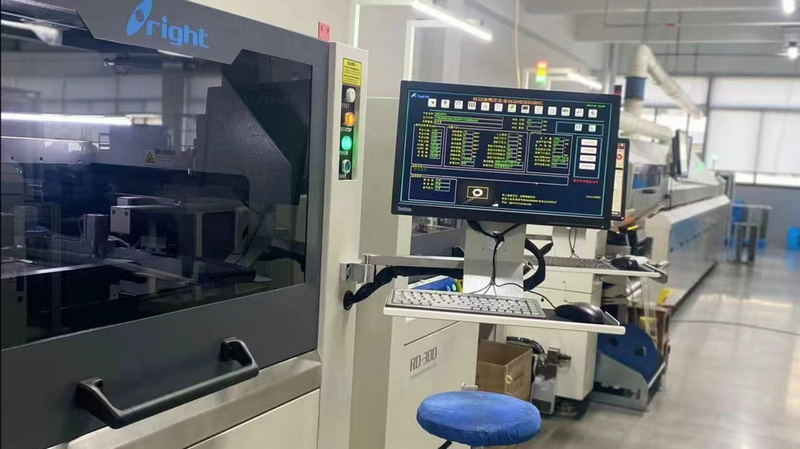
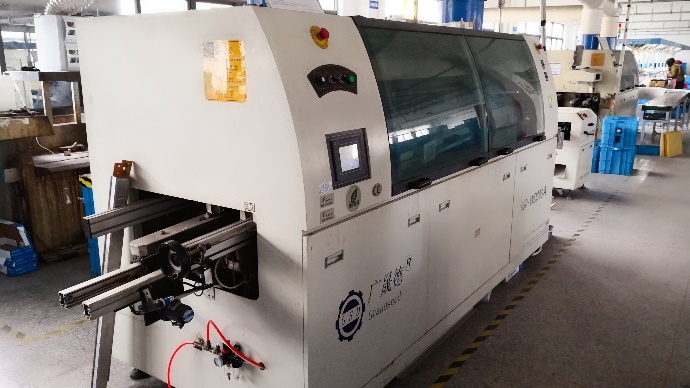
Established in 2007, Zhejiang Harlon Electronic Co., Ltd. operates a specialized 10,000 m² smart production center dedicated to switching power supply research and precision manufacturing. Unlike trading middlemen, Harlon controls the complete quality matrix in-house: from surface-mount placement (SMT) and automated component insertion to wave soldering, automatic double-liquid glue potting, and computerized burn-in verification.
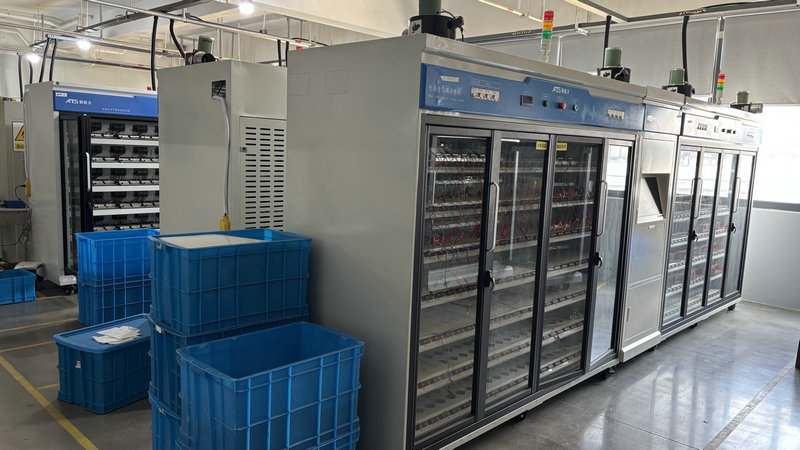
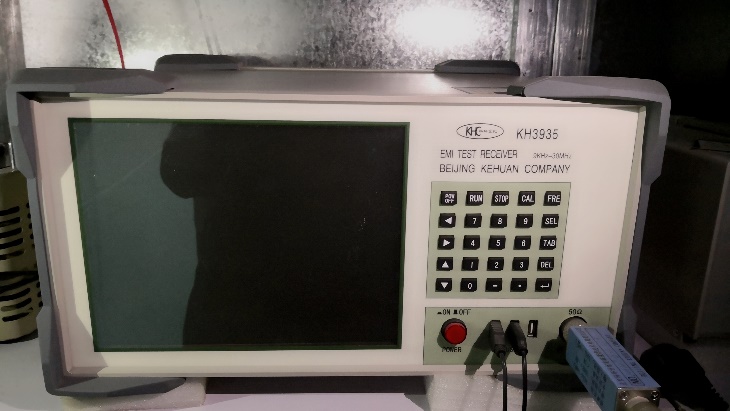
Every open frame power supply supplied to Bern undergoes 100% full-load high-temperature burn-in testing, accompanied by rigorous dielectric insulation (hi-pot) checks, vibration screening, and EMI spectrum validation. Backed by 31 stable tier-1 component vendor alliances and an R&D team led by engineers with three decades of design tenure, we support bespoke OEM/ODM requests including custom voltage rails (such as non-standard 15V, 36V, or dual balanced rails), customized thermal brackets, conformal PCB coating, and private branding.
Every single power unit is subjected to elevated ambient temperature testing under full electrical load to eliminate infant mortality defects prior to export crating.
Rapid schematic development, custom PCB layouts, fast physical prototype delivery within 7–14 days, and tailored harness/terminal pinouts tailored to your casing.
Comprehensive export compliance, complete technical data dossiers, CE/RoHS test documentation, and reliable DDU/FOB fulfillment channels.
Clear, direct technical answers to assist Swiss supply chain directors, electrical design engineers, and systems integrators.