Industrial Power EngineeringCharlotte OEM Supply Chain
Power Supply Module Manufacturers & Suppliers for Charlotte
Precision AC/DC Switched-Mode Power Systems (10W–3000W) engineered for the Piedmont Carolinas' advanced manufacturing, tier-3 financial data infrastructure, and logistics automation hubs.
High-Reliability Industrial Switched-Mode Power Supplies
Pre-tested and 100% full-load burn-in certified AC/DC enclosed power supplies engineered to satisfy the demanding 24/7/365 electrical environments of Charlotte and Mecklenburg County industrial operations.
Architecting Resilient DC Bus Distribution for Charlotte’s Industrial & Infrastructure Backbone
As the primary economic powerhouse of the Carolinas, the Greater Charlotte metropolitan area—spanning Mecklenburg, Cabarrus, Gaston, and York counties—has transitioned rapidly from traditional manufacturing into a sophisticated ecosystem dominated by hyperscale financial data hubs, high-speed automated logistics fulfillment nodes, precision automotive/motorsport engineering, and advanced medical technology manufacturing. In these ultra-demanding environments, the direct-current (DC) power supply module is far more than a simple step-down transformer; it serves as the foundational barrier between volatile electrical utility grids and high-value control logic.
System designers, panel integrators, and OEM equipment builders operating within the Duke Energy transmission territory face distinct challenges: transient surges from heavy industrial neighbors, sustained high summer ambient temperatures exceeding 40°C in unconditioned distribution facilities, and rigid requirements for power supply mean time between failures (MTBF > 350,000 hours). Understanding the critical trade-offs between forward converter architectures, half-bridge LLC resonant topologies, thermal conduction dissipation paths, and electromagnetic compatibility (EMC) is critical to maintaining high uptime across continuous production shifts.
1. Piedmont Industrial Landscape: Power Demands Across Charlotte’s Core Corridors
Charlotte occupies a unique position as the second-largest banking center in the United States and a major nexus of the Interstate 85 / Interstate 77 logistics super-corridors. Electrical power conversion requirements vary substantially across these distinct operational sub-sectors:
Tier 3/4 Data Center Micro-Power
Uptown Charlotte and University Research Park host dense financial data operations. While primary racks rely on centralized UPS arrays, critical sub-systems—such as server chassis thermal management, environmental monitoring IoT nodes, fire suppression solenoids, and physical access control units—depend on distributed 12V and 24V DC DIN-rail modules that deliver ultra-low ripple voltage (<100mVp-p) to prevent signal distortion across high-frequency interfaces.
High-Throughput Logistics & Sortation
Facilities surrounding Charlotte Douglas International Airport (CLT Intermodal Hub) and southwest Mecklenburg logistics clusters require ruggedized 24V and 48V power modules powering thousands of roller-conveyors, optical barcode scanning tunnels, automated guided vehicles (AGVs), and robotic palletizers. High inrush current capacity (up to 150% peak load for 3–5 seconds) is essential to start inductive DC motor loads without tripping circuit breakers.
Advanced Automation & CNC Machining
From Concord’s motorsport composites machining to Gaston County’s specialized textile machinery, CNC routers, robotic arms, and servo positioning drives demand switching power modules equipped with active power factor correction (PFC > 0.98) and comprehensive EMI filtering compliant with EN 55032 Class B, ensuring electrical noise from variable frequency drives does not trigger false controller trips.
2. Switched-Mode Topologies: Technical Comparison for System Architects
When selecting a power module for control cabinet integration, machine builders must evaluate efficiency, heat dissipation, component complexity, and overall cost. The table below outlines empirical performance across commonly deployed architectures within the 100W to 1000W envelope:
Circuit Topology
Typical Wattage Range
Average Efficiency
Thermal Characteristic
EMI Profile
Optimal Charlotte Application
Flyback (Quasi-Resonant)
10W – 150W
84% – 88%
Localized heat on primary switch; relies on convection
Extremely low EMI; smooth sinusoidal tank currents
Hyperscale data telemetry, high-density server aux arrays
Full-Bridge Phase-Shift (ZVS)
1000W – 3000W+
93% – 96%
Requires forced air; high thermal throughput
Well-controlled at high switching frequencies
Heavy motor drives, industrial battery charging, EV test rigs
Engineering Advisory: Power Factor Correction (PFC) Mandates
Industrial commercial electricity billing in Duke Energy Carolinas service zones often assesses power factor penalties when customer facility PF dips below 0.85 to 0.90. By deploying Harlon switched-mode power supplies featuring built-in Active PFC circuits, industrial control systems maintain power factors above 0.98 at nominal loads, reducing reactive current draw and thermal build-up inside central feeder ducts.
3. Thermal Derating and In-Cabinet Enclosure Design
Control panels deployed in non-air-conditioned Carolina facilities regularly reach internal ambient temperatures of 50°C to 60°C during peak summer months. Operating standard consumer-grade power modules in these enclosures results in thermal runaway, electrolyte drying in aluminum capacitors, and premature component degradation.
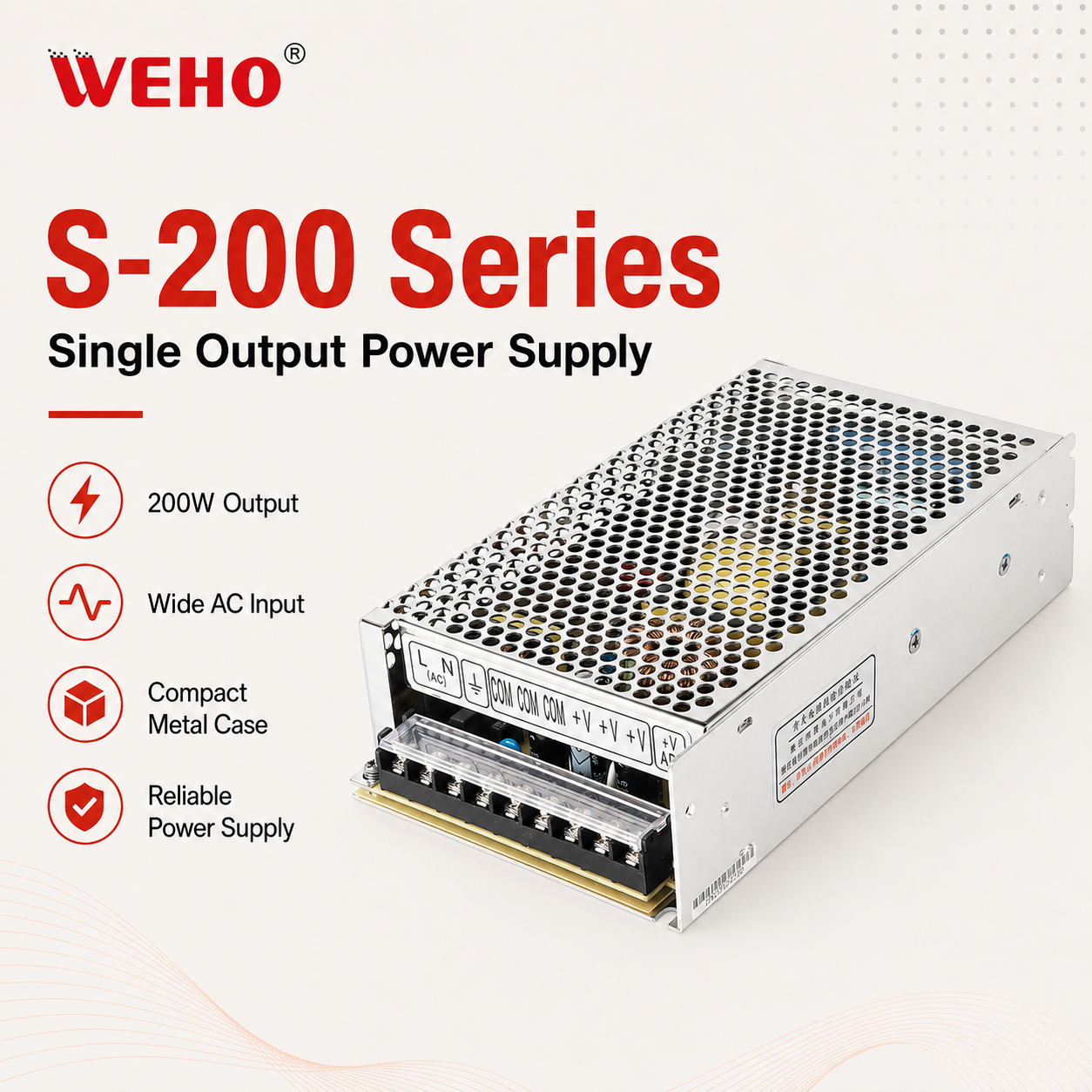
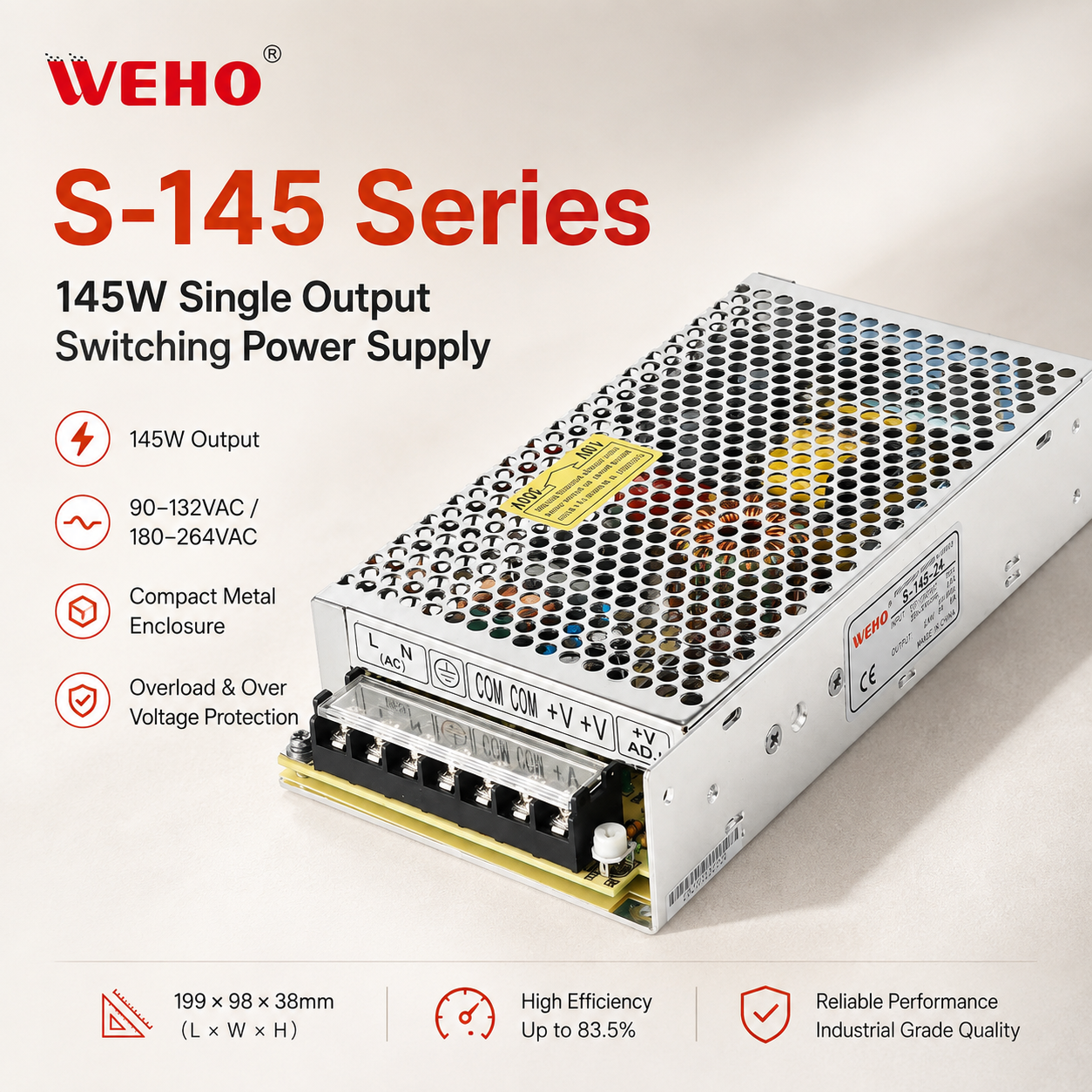
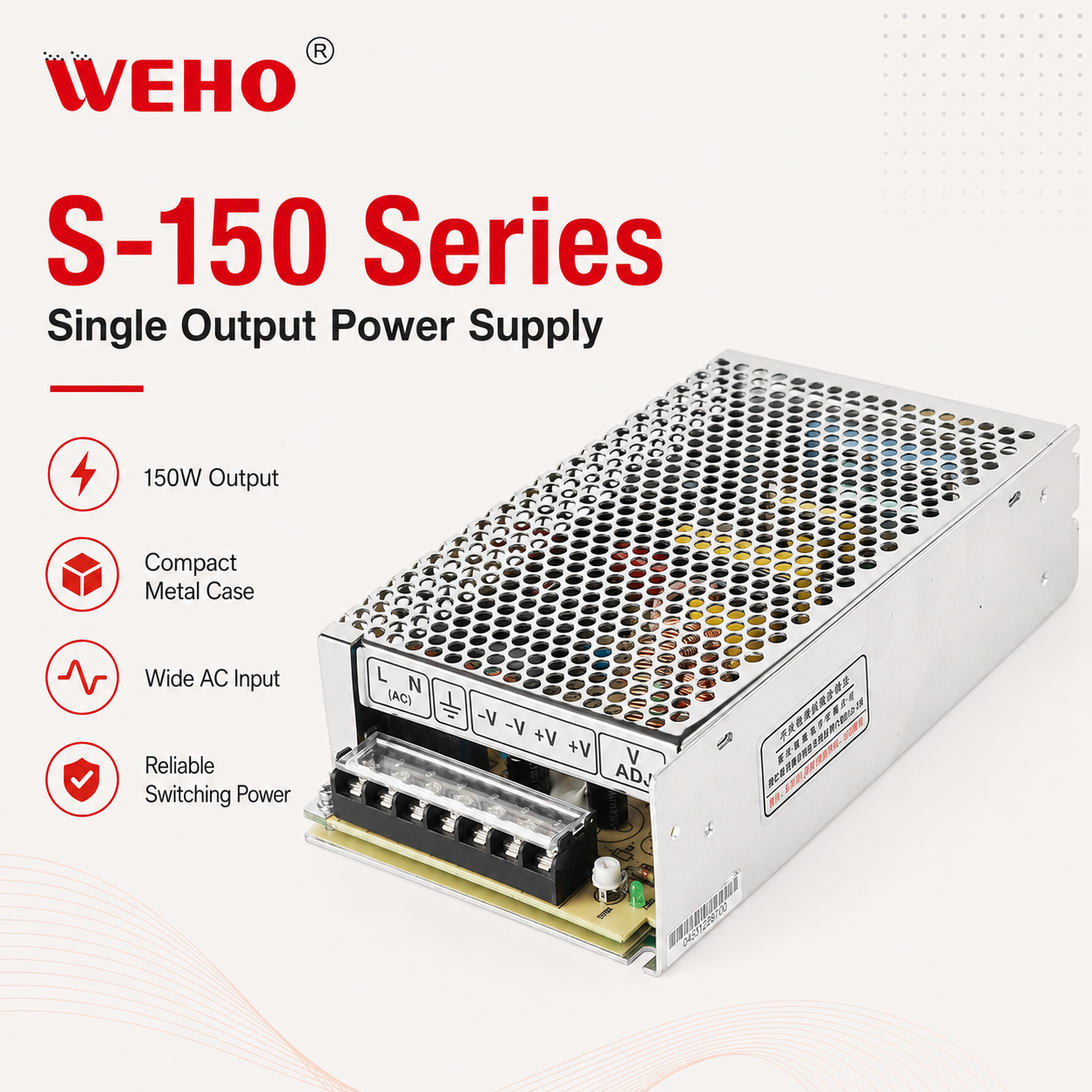
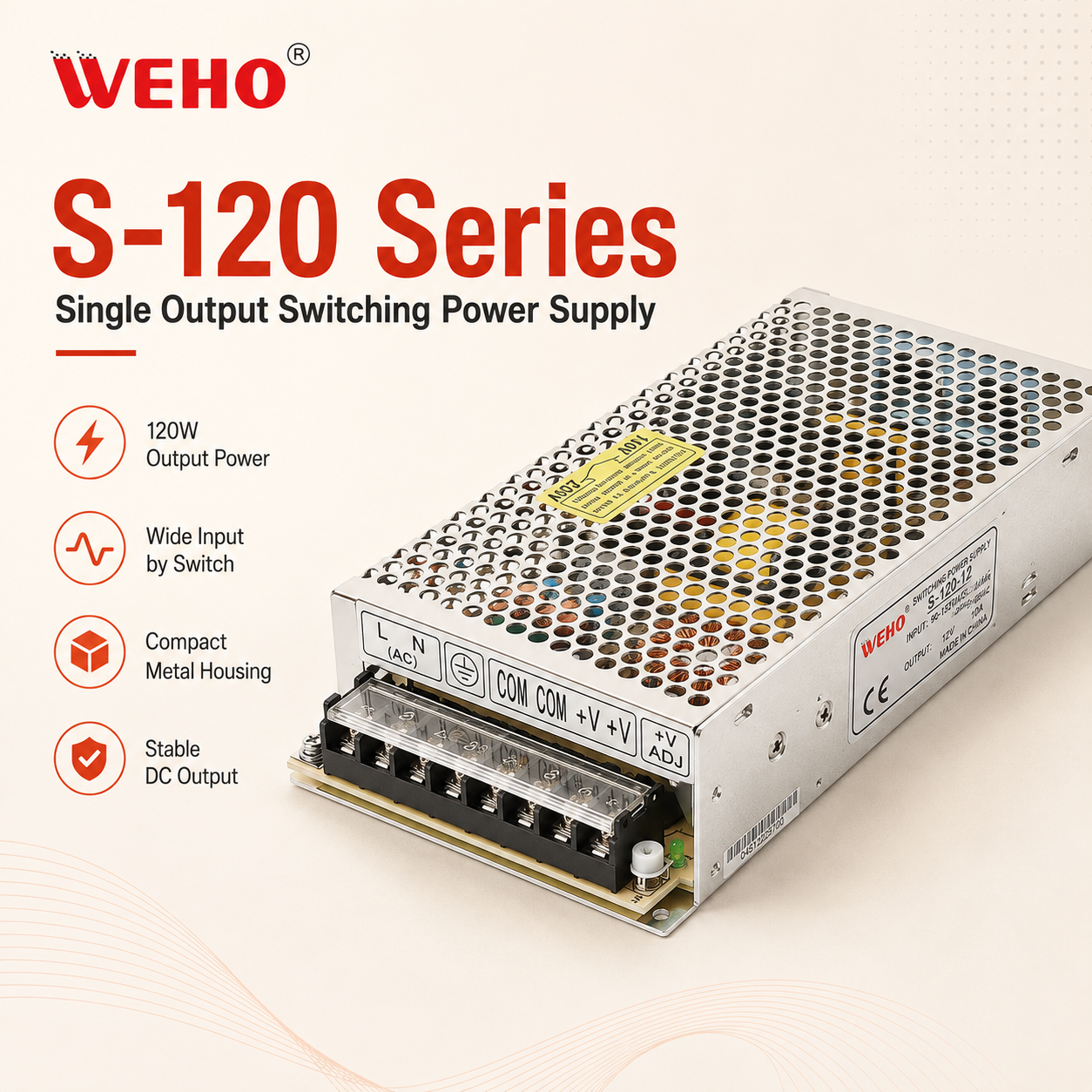
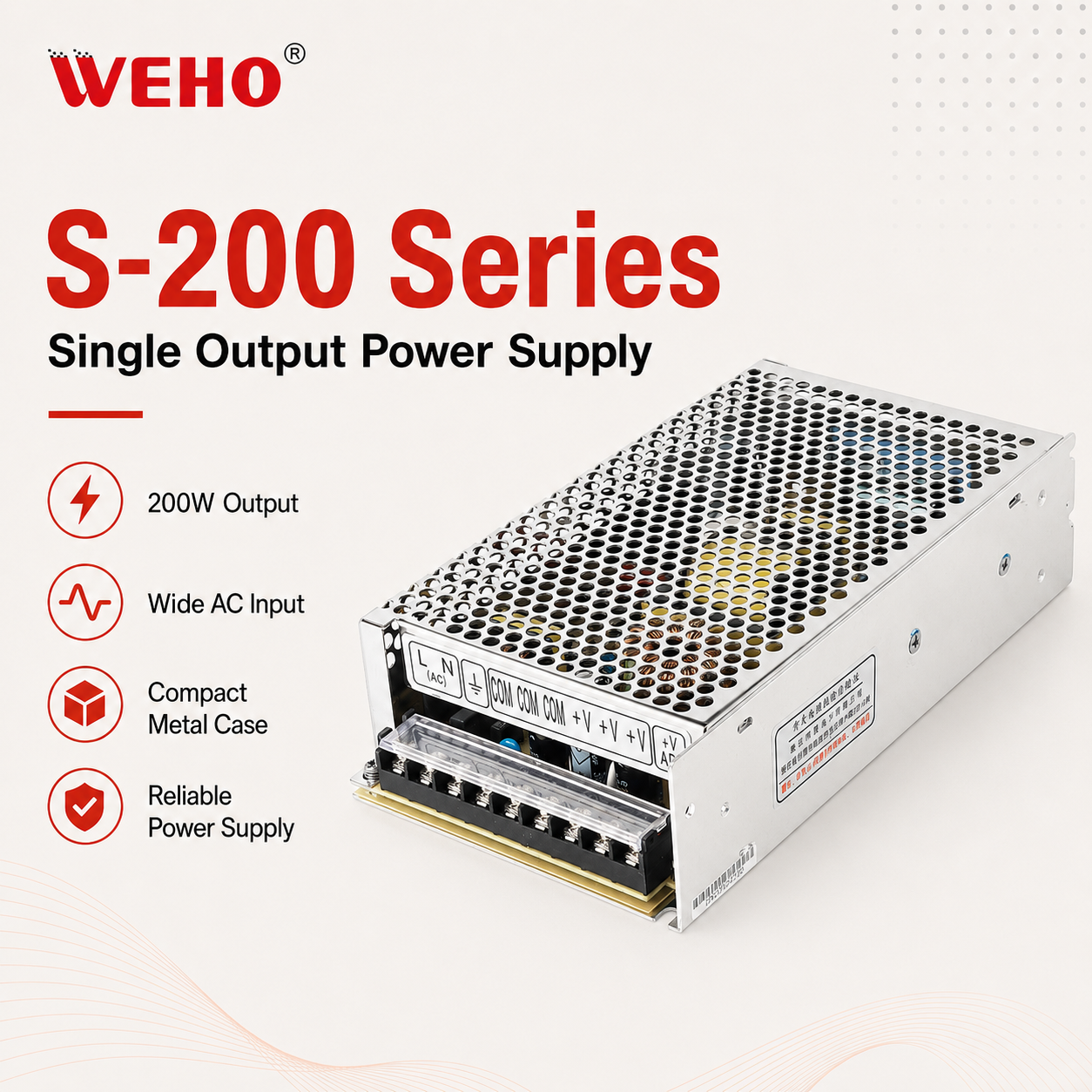
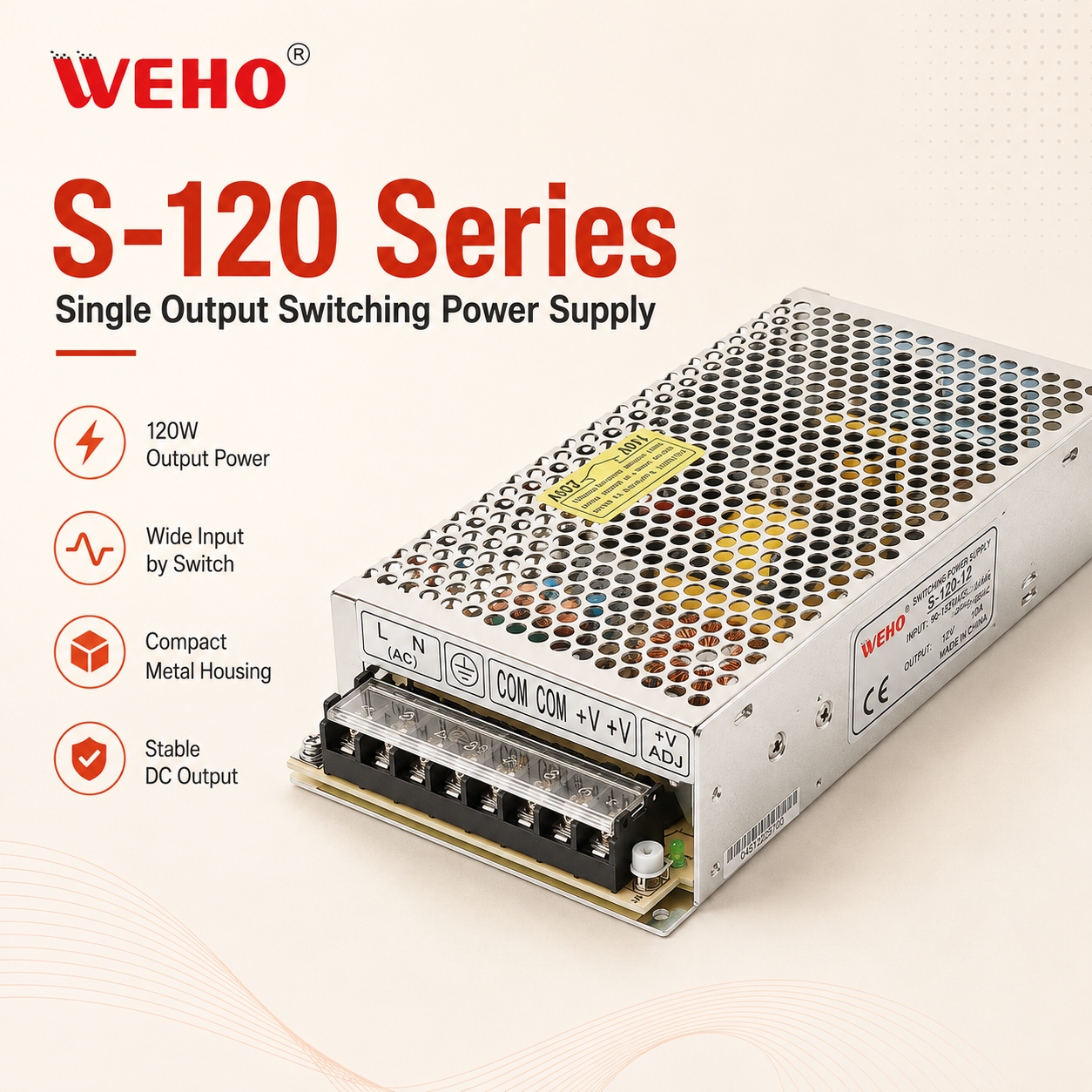
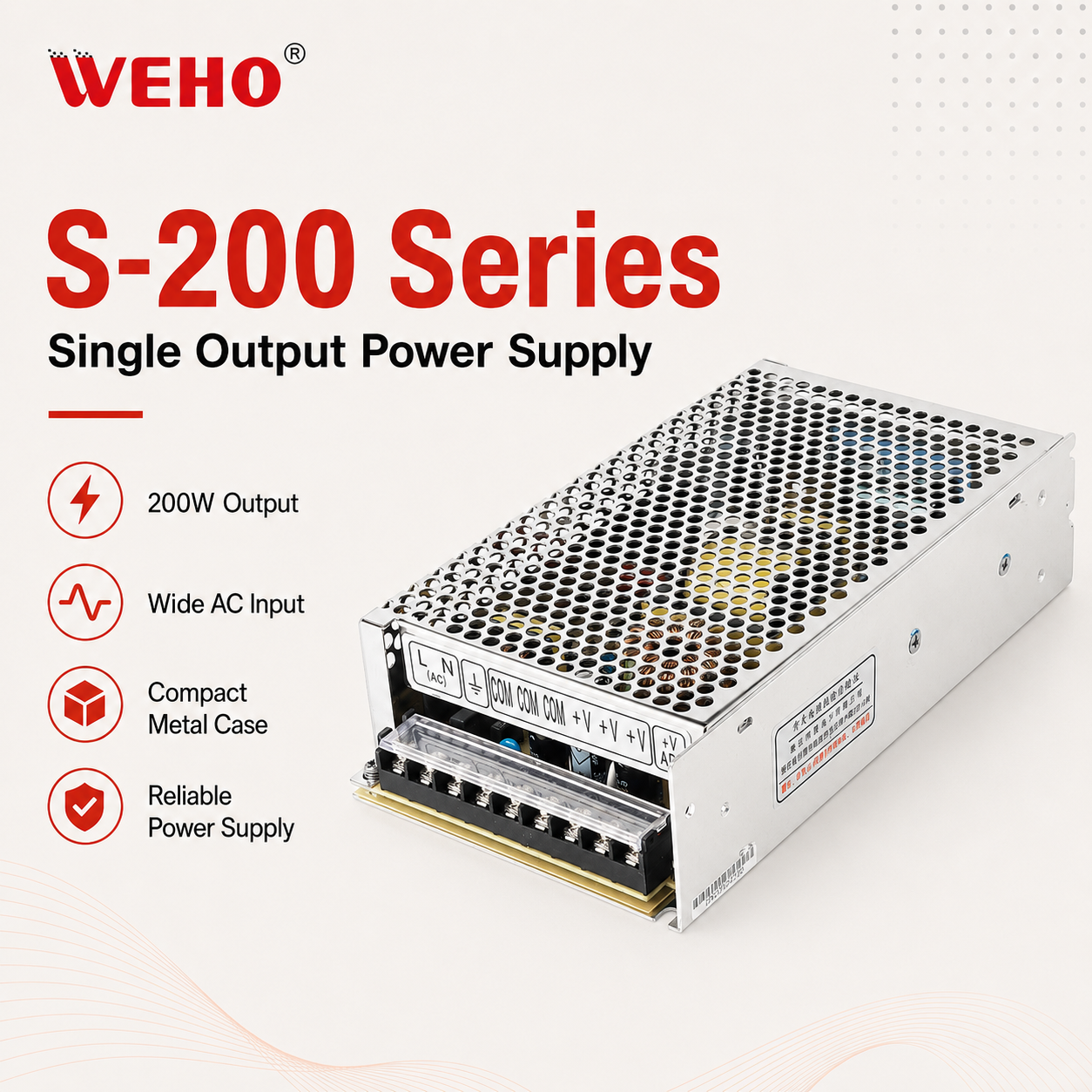
Harlon power supply modules (such as the LRS, S, and SE series) utilize 105°C-rated long-life Japanese and tier-1 domestic electrolytic capacitors, combined with heavy-gauge aluminum honeycomb chassis designed for superior natural convection airflow. As documented in our thermal derating curves, units maintain 100% rated output up to 50°C ambient, derating linearly to 50% load at 70°C. For enclosed high-power applications (over 350W), integrated smart brushless fans activate dynamically only when internal heat-sink temperatures cross 55°C, preventing continuous acoustic noise and extending bearing service life past 50,000 hours.
4. Local Industrial Trends Across the Carolinas (2025–2030)
The transition toward electrification and clean energy across North and South Carolina is driving an unprecedented evolution in power supply procurement:
EV Battery & Supply Chain Corridor: With major lithium processing, battery component plants, and EV assembly facilities expanding along the I-85 corridor from Charlotte to Spartanburg, demand for 48V to 72V DC staging power supplies with tight voltage precision (±1%) has increased by 40% year-over-year.
Transition to 48V DC Micro-Distribution: To lower copper wiring costs and minimize $I^2R$ power distribution losses in large logistics facilities, system integrators are shifting from traditional 12V/24V bus architectures to 48V centralized DC bus lines, stepping down locally at machine nodes via high-efficiency DC-DC buck converters.
Wide Bandgap Semiconductors (GaN & SiC): Next-generation industrial power designs are adopting Silicon Carbide (SiC) Schottky diodes and Gallium Nitride (GaN) switching transistors. These materials facilitate switching frequencies up to 500kHz, allowing a 35% reduction in transformer core volume and enabling ultra-slim (30mm profile) form factors ideal for shallow depth machinery panels.
Direct Manufacturer Capabilities
Why Charlotte Engineers Partner Directly with Zhejiang Harlon
Bypassing multi-tier middleman distributor markups, our ISO 9001 certified manufacturing facility provides direct engineering support, scalable OEM/ODM flexibility, and exhaustive end-to-end quality validation.
18+ Years OEM/ODM Heritage
Founded in 2007, Zhejiang Harlon Electronic Co., Ltd. has delivered over 15 million industrial power modules globally, maintaining active distribution across North America, South America, and Europe.
SGS On-Site Audited Plant
Our 10,000 square meter factory in Wenzhou, Zhejiang, operates more than 10 specialized production lines verified on-site by SGS Group, encompassing automated high-speed SMT placement, auto-insertion, and dual-wave soldering.
31 Strategic Raw Material Partners
Long-term contracts with 31 qualified electronic component suppliers guarantee stable sourcing of primary power ICs, magnetic ferrites, copper windings, and high-temp electrolytic capacitors without unexpected component revisions.
100% High-Temperature Burn-In
Every single manufactured unit undergoes loaded burn-in aging inside high-temperature chambers at 45°C–50°C under full rated current for 4 to 8 hours to eliminate early component mortality before shipment.
In-House EMC & Surge Test Lab
We test on our own EMI receivers, lightning surge simulators (up to 4kV), vibration tables, and high-voltage breakdown benches, ensuring complete compliance with CE, RoHS, and international safety directives.
Tailored OEM Customization
From custom DC output voltages (3.3V to 110V DC), custom terminal block wiring harnesses, customer-specific barcoding/labeling, conformal moisture-proof coatings, to bespoke chassis footprints for tight spaces.
Procurement & Integration Guide
Frequently Asked Questions: Sourcing Power Modules in Charlotte, NC
Critical considerations for purchasing managers, electrical engineers, and control integrators sourcing industrial power supplies across the Carolinas.
How do Harlon power supplies integrate with typical North Carolina utility power feeds?
Industrial commercial services provided by Duke Energy Carolinas typically supply single-phase 120V, split-phase 240V, or three-phase 208V/480V (stepped down to 277V single-phase). Harlon standard switching power supplies incorporate wide-range universal AC inputs (85–264VAC or switchable 110V/220V), accommodating line voltage sags and surges without loss of DC bus regulation.
What certifications and compliance documents are provided for OEM export from the US?
Our modules are engineered to meet UL 62368-1 (audio/video, information and communication technology equipment) and UL 508 / EN 61010-1 industrial control standards. Comprehensive CE Certificates of Conformity, RoHS environmental compliance reports, and full factory inspection reports (FIR) with electrical burn-in traces accompany orders.
What is the typical shipping transit time and logistics routing into Charlotte?
For rapid sample evaluation and prototyping, air freight direct to Charlotte Douglas International Airport (CLT) takes approximately 4–6 business days via DHL/FedEx/UPS. For containerized commercial volume production, shipments are routed via the Port of Charleston or Port of Wilmington, reaching Charlotte inland intermodal container yards in 22–28 days.
Can we request custom DC output voltages and private buyer labeling?
Yes. With 18 years of OEM/ODM background, we readily produce custom voltage taps (such as non-standard 18V, 36V, or 60V rails), incorporate custom potentiometer fine-tuning ranges (±10%), apply branded buyer labels with your company part numbers, and customize terminal block connectivity for rapid panel building.
How do you safeguard against component counterfeit issues and premature failure?
We purchase critical silicon ICs, power MOSFETs, and Schottky barrier rectifiers exclusively through authorized direct manufacturers or franchised distributors. Furthermore, incoming raw materials undergo strict optical and metallurgical inspection, backed by 100% full-load burn-in screening at elevated operating temperatures before packaging.
What warranty terms and technical engineering support are offered?
Harlon standard industrial switching power supplies are backed by an industry-leading 2 to 3-year factory warranty. Our senior R&D engineering department—with nearly 30 years of power electronics design leadership—provides direct design-in reviews, schematic feedback, and thermal derating guidance within 24 hours of your request.
Direct Factory Quote
Empower Your Charlotte Manufacturing Project Today
Whether you require standard 12V/24V/48V SMPS replacement inventory or a fully custom-engineered AC/DC module built to your mechanical envelope, our power engineering team is ready to assist.
 Deutsch
 Español
 Français
 Português
 Italiano
 Русский
 العربية
 Türkçe