Precision AC/DC and Inversion Conversion Units Engineered for Harsh Ambient High-Load Stability
A rigorous examination of electrical power topology, harmonic mitigation, thermal derating constraints, and regional procurement strategies across Maricopa County.
In the hyper-expanding southwestern industrial corridor centered around Phoenix, Arizona, the demand for precision power conversion has shifted dramatically. Once dominated by standard modified sine wave converters and consumer-grade backup generators, the modern Phoenix commercial and utility landscape now requires true pure sine wave power inverters capable of maintaining Total Harmonic Distortion (THD) under 3% under non-linear inductive loads. The Valley of the Sun presents some of the most unforgiving operating conditions in North America: extreme sustained ambient temperatures frequently exceeding 115°F (46°C), severe seasonal dust accumulation during Sonoran monsoon microbursts, and rapid diurnal thermal cycling that induces thermal-mechanical fatigue on PCB solder joints and power semiconductors.
Whether serving critical edge data centers in Mesa, commercial solar PV plus battery energy storage systems (BESS) interconnected with Arizona Public Service (APS) and Salt River Project (SRP), off-grid telecommunication towers scattered throughout the Gila River corridor, or mobile emergency vehicles operating across the metropolitan area, clean alternating current is paramount. Modern electronics, variable frequency drive (VFD) HVAC compressors, sensitive medical refrigeration, and automated PLCs cannot tolerate the third and fifth-order harmonics typical of modified square wave waveforms. This comprehensive white paper explores the engineering benchmarks, local environmental challenges, localized development trends, and the definitive top 10 pure sine wave inverter manufacturers and suppliers serving the Phoenix market.
Deploying resilient power electronics where standard commercial units experience premature component failure.
With Phoenix receiving over 300 days of direct sunshine, rooftop commercial solar installations and utility-scale battery energy storage systems (BESS) require bi-directional pure sine inverters. Systems must support smooth transfer switching (<8ms) during grid brownouts while complying with APS and SRP interconnect technical requirements.
The Chandler and Mesa technology parks host massive cloud computing clusters. Pure sine wave inverters act as auxiliary uninterruptible power supply (UPS) backbones, guaranteeing clean voltage waveforms with zero phase drift to protect mission-critical servers, network switches, and fiber optical nodes.
Phoenix municipal fire and rescue, mobile paramedic vehicles, and desert transit authorities rely on high-frequency pure sine wave inverters to operate sensitive defibrillators, mobile telemetry, radio relays, and air purification equipment without causing electromagnetic interference (EMI).
During triple-digit summer peaks, air conditioning compressors place extraordinary locked-rotor inductive start-up surges on inverters. Premium pure sine wave designs feature up to 200%–300% surge capacity for 3 to 10 seconds, preventing voltage sag and protecting delicate brushless blower motors.
From open-pit copper mines in Pinal and Gila County to off-grid microwave repeater stations on desert mountain peaks, pure sine wave units provide galvanic isolation, lightning surge suppression, and conformal-coated resilience against airborne silica dust and static electrical charges.
Precision aerospace machine shops throughout the Phoenix East Valley utilize isolated pure sine inverters to drive automated CNC mills, laser cutters, and 3D printing equipment, eliminating power line notches, voltage spikes, and common-mode harmonic ground noise.
Regulatory frameworks, utility interconnection mandates, and climate-induced design evolutions.
| Trend Catalyst | Technical / Operational Impact | Phoenix Market Implication | Procurement Specification Directive |
|---|---|---|---|
| APS / SRP Interconnection Mandates | Transition toward IEEE 1547-2018 and UL 1741-SB smart inverter standards with autonomous reactive power control (Volt-VAR / Volt-Watt). | Maricopa County utilities strictly audit interconnection filings to prevent localized voltage destabilization on high-penetration solar feeders. | Specify smart inverter firmware updates, bi-directional Modbus RTU/TCP protocols, and automated anti-islanding isolation switchgear. |
| Extreme Desert Ambient Derating | Inverters labeled for 25°C laboratory benchmarks experience up to 40% thermal derating when deployed in 50°C outdoor Phoenix enclosures. | Premature thermal shutdown, capacitor electrolyte boil-off, and accelerated IGBT switching failure during July-August peak cooling periods. | Mandate oversized aluminum heat sink extrusions, magnetic component potted encapsulation, and high-temp electrolytic capacitors (105°C rated). |
| Commercial Peak-Shaving BESS | Shift toward high DC bus architectures (48V to 400V DC) to minimize I²R copper losses in heavy discharge cycles. | Industrial facilities across Phoenix utilize storage inverters to bypass costly utility demand charges during the 4 PM – 9 PM SRP on-peak window. | Require dynamic load tracking, sub-10ms transfer capability, and dual-direction high-efficiency MPPT / SMPS integration. |
| Conformal Coating & NEMA 4X / IP66 | Fine particulate silica sand during haboob dust storms penetrates open-vented inverters, leading to high-voltage PCB tracking and arcing. | Installations require either pressurized filtered enclosures or solid-state conformal potted power stages with IP65+ ingress ratings. | Enforce IPC-A-610 Class 2 or Class 3 conformal coating inspection and dust-filtered forced-air cooling designs. |
A comparative assessment based on manufacturing capabilities, thermal endurance, engineering compliance, and localized distribution logistics.
Operating as a premier Tier 1 manufacturing partner since 2007, Harlon provides high-density power conversion platforms, custom pure sine wave inverters, and high-power AC/DC switching power supplies (10W to 3000W). With an SGS on-site assessed 10,000 m² smart factory, Harlon delivers OEM/ODM customization with full high-temperature load burn-in for severe desert environments.
Globally renowned for premium off-grid and marine systems, Victron maintains robust distribution channels in Phoenix. Their MultiPlus and Quattro pure sine inverter/chargers are widely specified by Phoenix solar contractors for off-grid residential and commercial emergency backup setups.
With established technical sales offices and master distributor representation across Arizona, Schneider Electric's Conext series and Xantrex commercial pure sine wave inverters serve high-reliability industrial automation, telecom sites, and commercial fleet electrifications throughout Maricopa County.
AIMS Power supports a substantial portion of the Phoenix commercial contractor base via prompt logistics and distribution networks. Their low-frequency pure sine wave inverters feature massive toroidal transformers suited for heavy industrial motors and desert solar setups.
Engineered specifically for remote desert deployments, Morningstar's pure sine wave inverters (such as the SureSine series) are designed without internal cooling fans, relying on heavy-duty convection cooling to eliminate dust ingress during Phoenix desert sandstorms.
OutBack Power has long been a staple in Arizona off-grid engineering. Their Radian and FXR series pure sine wave inverters are designed to handle severe heat swings and dirty grid power, offering full compatibility with advanced lithium and lead-acid battery banks.
Magnum Energy pure sine wave inverters from Sensata Technologies are standard specifications for emergency vehicle builders, utility service trucks, and luxury RV manufacturers located in and around the Phoenix transit corridors, offering high thermal efficiency and rugged die-cast aluminum chassis.
Samlex America provides pure sine wave inverters from 150W up to 4000W across Phoenix telecom, surveillance, and government sectors. Their units feature high-efficiency topologies, low idle current draw, and strict FCC Class A/B EMI suppression compliance.
Distributed extensively through industrial electrical wholesalers across Arizona, Cotek manufactures compact, microprocessor-controlled pure sine wave inverters with parallel capability and wide DC input ranges tailored for 24V and 48V telecom rectifiers and solar plants.
Exeltech is renowned in the Phoenix defense, aviation, and public safety radio networks for manufacturing true sine wave inverters that produce the cleanest AC wave in the industry (THD < 2%). Made in the USA with modular N+1 redundancy architectures, they eliminate single-point power failures.
Since 2007, Zhejiang Harlon Electronic Co., Ltd. has established an internationally audited power electronics manufacturing center. As an ISO 9001 certified and SGS on-site assessed OEM/ODM supplier, we solve the exact thermal, harmonic, and reliability challenges encountered in demanding regional markets like Phoenix, Arizona.
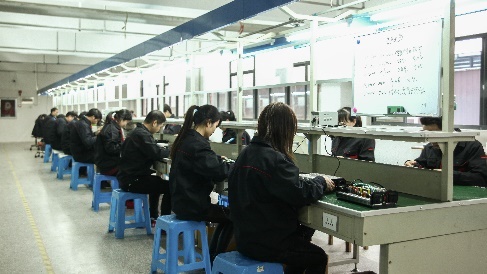
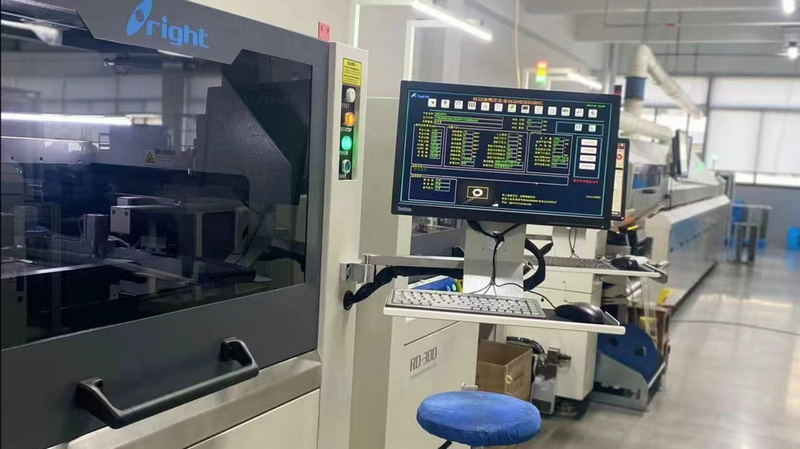
Dedicated production floorspace housing over 10 automated lines, including Yamaha/Panasonic high-speed SMT, auto-insertion, and dual wave soldering systems.
Led by a senior power engineering team with three decades of switching and inverter topology experience, enabling bespoke PCB layouts, magnetic design, and firmware tuning.
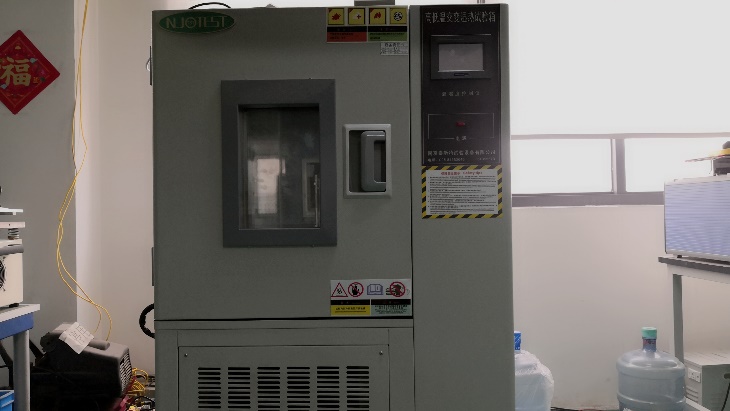
Every single unit undergoes heated aging room tests under full continuous dynamic load to eliminate early-stage component attrition and infant mortality.
Equipped with EMI receivers, lightning surge generators, high-low temperature thermal shock chambers, earth ground testers, and high-voltage insulation systems.
Direct answers addressing solar contractors, commercial EPCs, and industrial facility managers.
Modified sine wave inverters generate an alternating voltage resembling a stepped square wave with high total harmonic distortion (THD exceeding 20% to 35%). In Phoenix, where air conditioning compressors, refrigeration pumps, high-precision industrial tooling, and variable frequency drives (VFDs) run continuously, modified waveforms cause severe inductive heating, audible motor hum, reduced mechanical efficiency, and premature winding breakdown.
A true pure sine wave inverter produces a clean, smooth sinusoidal curve with THD < 3%, identical to or cleaner than utility grid power from APS or SRP. This preserves electronic component life, prevents micro-controller logic glitches, and meets strict warranty conditions for sensitive equipment.
Standard commercial inverter nameplate capacities are benchmarked at 25°C (77°F). During Phoenix summer months, outdoor ambient shade temperatures regularly hit 46°C (115°F), while internal temperatures within sealed electrical enclosures can easily surpass 60°C (140°F).
When engineering outdoor installations in Maricopa County, procurement teams should apply a minimum 25% to 35% safety headroom derating factor. For instance, if your continuous load requirement is 2,400W, you should specify a unit rated for at least 3,500W continuous output at nominal room temperature, ensuring the inverter operates well below its thermal throttling threshold without tripping internal over-temperature protection.
Low-Frequency Inverters: Utilize massive iron/copper toroidal transformers operating at 50Hz/60Hz. They provide superior surge capability (up to 300% for 10-20 seconds), natural galvanic isolation, and high tolerance to dirty power. They are heavier and more expensive, making them ideal for heavy industrial motors, well pumps, and off-grid mining sites across Arizona.
High-Frequency Inverters: Use electronic MOSFET/IGBT switching at tens of kilohertz before passing through smaller ferrite transformers. They are much lighter, compact, highly efficient at lower standby power, and cost-effective. They are perfectly suited for telecommunications racks, mobile medical fleets, and residential backup setups where space and weight are critical factors.
All inverters connecting to electrical panels in commercial and residential facilities must adhere to the National Electrical Code (NEC 2020/2023), requiring UL 1741 (or UL 1741-SB for smart grid support) and CSA 22.2 No. 107.1 certifications. For installations interfacing with APS or SRP grids, compliance with IEEE 1547-2018 interconnection standards and autonomous grid-supportive algorithms (Volt/VAR control) is legally enforced. For mobile fleet installations, FCC Class B certification is required to avoid radio and telemetry interference.
Yes. As an established direct manufacturer, Zhejiang Harlon Electronic Co., Ltd. provides comprehensive OEM/ODM customization services. We tailor input DC voltages (12V, 24V, 48V, 72V, 110V, 400V), output AC voltages (100V, 110V, 120V, 220V, 230V, 240V split-phase), frequency (50/60Hz), custom enclosure finishes, conformal potting coatings, and communication interfaces (RS485, CAN bus, Modbus). We deliver prototype testing samples, provide full technical compliance documentation, and accept buyer labeling programs.
Consult with our senior technical sales team to specify custom input/output voltages, extreme-heat derating curves, and volume B2B wholesale pricing for the Phoenix market.
Get Catalog