Top Trusted Battery Backup Power Supply Supplier & Exporters for Columbus
High-reliability AC/DC industrial switching supplies, DC-UPS buffer rectifiers, and precision float charging units engineered for Central Ohio's automated manufacturing hubs, Rickenbacker logistics, and Silicon Heartland data clusters.
Precision DC Architectures
Industrial Switched-Mode Power & Backup Solutions
Engineered for seamless transition, ripple-free bus regulation, and direct integration with auxiliary battery backup assemblies across Columbus industrial facilities.
Industrial Battery Backup & SMPS Integration in Columbus, OH
Navigating PJM grid dynamics, sudden seasonal thermal swings, and ultra-high reliability demands across the New Albany high-tech corridor and Central Ohio distribution logistics.
1. The Electrical Landscape of Greater Columbus and the PJM Grid
Columbus, Ohio stands today as one of North America's most strategically vital technology and manufacturing epicenters. Anchored by the New Albany "Silicon Heartland" semiconductor fab investments, an explosive hyperscale data center footprint, and massive intermodal supply chain arteries traversing the Rickenbacker International Airport corridor, Central Ohio requires unmatched DC power stability. The local grid operates within the PJM Interconnection—a regional transmission organization managing severe load variations driven by both heavy industrial machining and the rapid electrification of commercial facilities.
In this operating theater, momentary sags, harmonic distortions, brownouts, and severe summer thunderstorms create substantial power quality risks. For industrial automation systems, automated guided vehicles (AGVs), programmable logic controllers (PLCs), and critical environmental monitoring arrays, even a sub-16 millisecond voltage collapse can trip safety interlocks, corrupt machine state registries, and trigger hundreds of thousands of dollars in line stoppage losses. Deploying robust AC/DC switching power supplies designed for parallel pairing with DC-UPS battery backup modules provides an indispensable first line of defense.
"For Columbus plant engineers, a switching power supply is no longer an isolated converter; it serves as the precision rectifying core of an uninterruptible 24V or 48V DC float bus. Maintaining sub-1% voltage regulation across dynamic step loads while managing safe battery charging curves prevents costly nuisance restarts on precision pick-and-place lines."
2. Battery Buffering Topologies: Integrating SMPS with DC-UPS Assemblies
Modern industrial backup architectures diverge sharply from monolithic, centralized AC uninterruptible power supplies (UPS). Centralized double-conversion UPS units suffer from notable conversion losses (AC to DC and back to AC, followed by a secondary SMPS conversion back to 24V DC). Instead, advanced installations across Franklin, Delaware, and Licking counties increasingly utilize localized, distributed DC-UPS topologies.
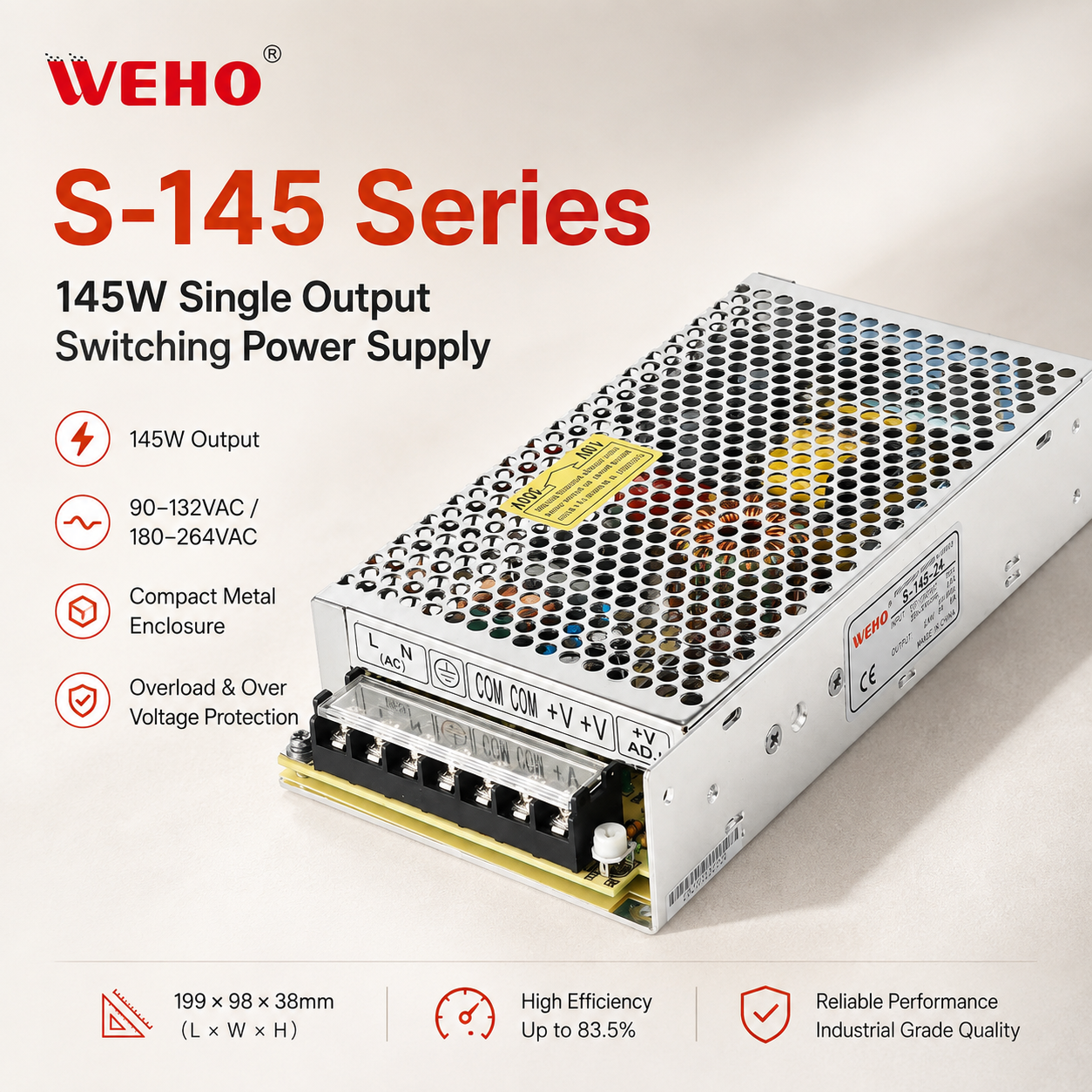
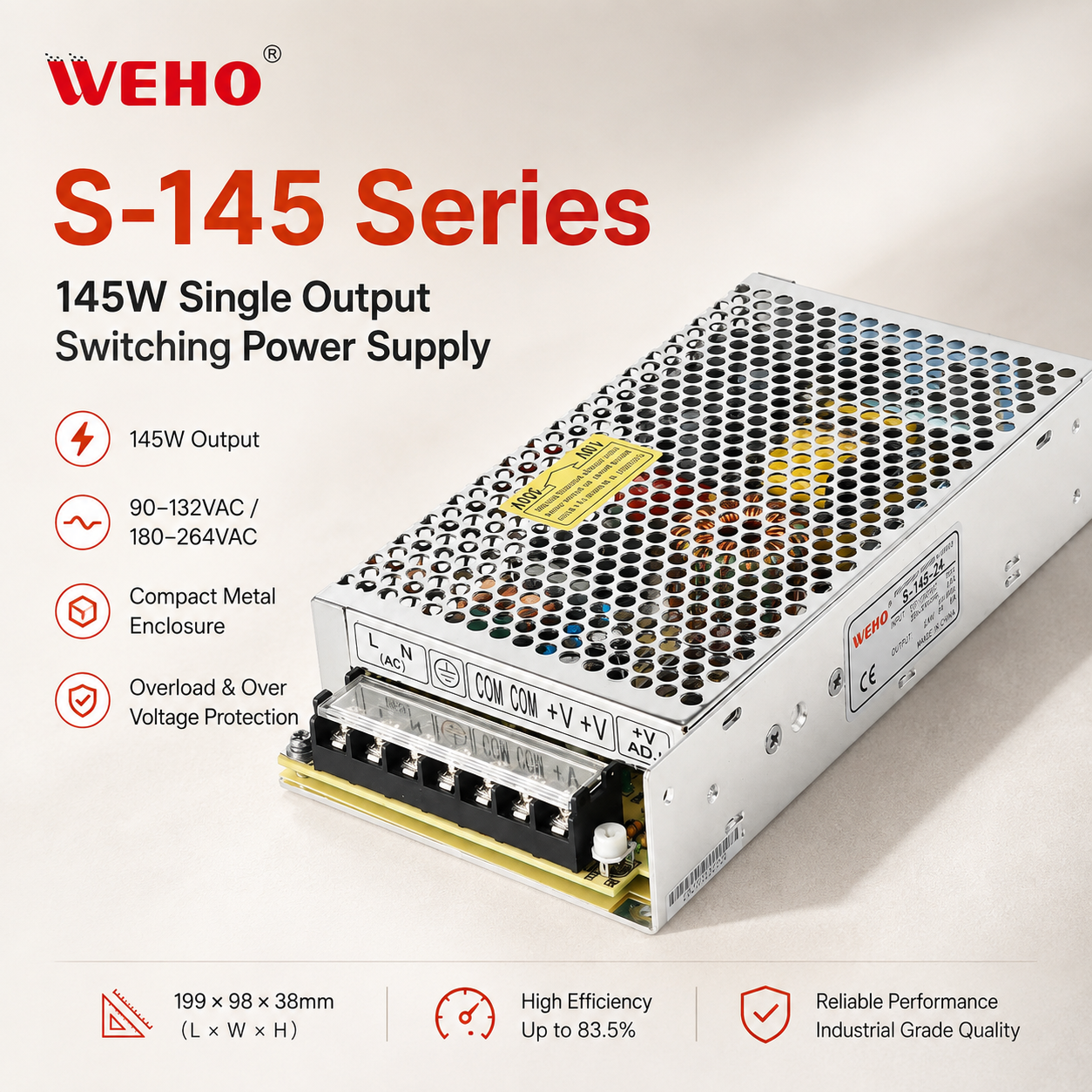
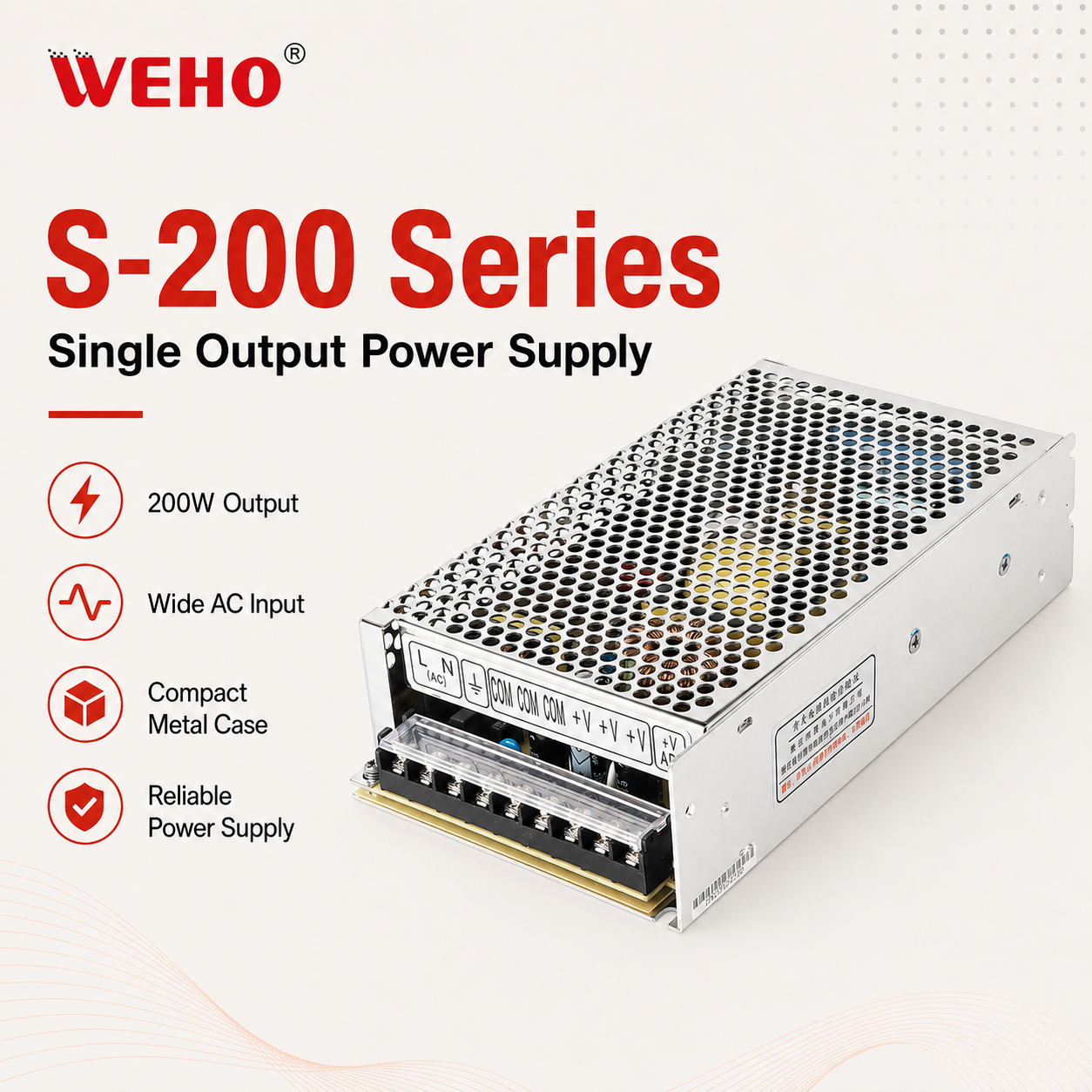
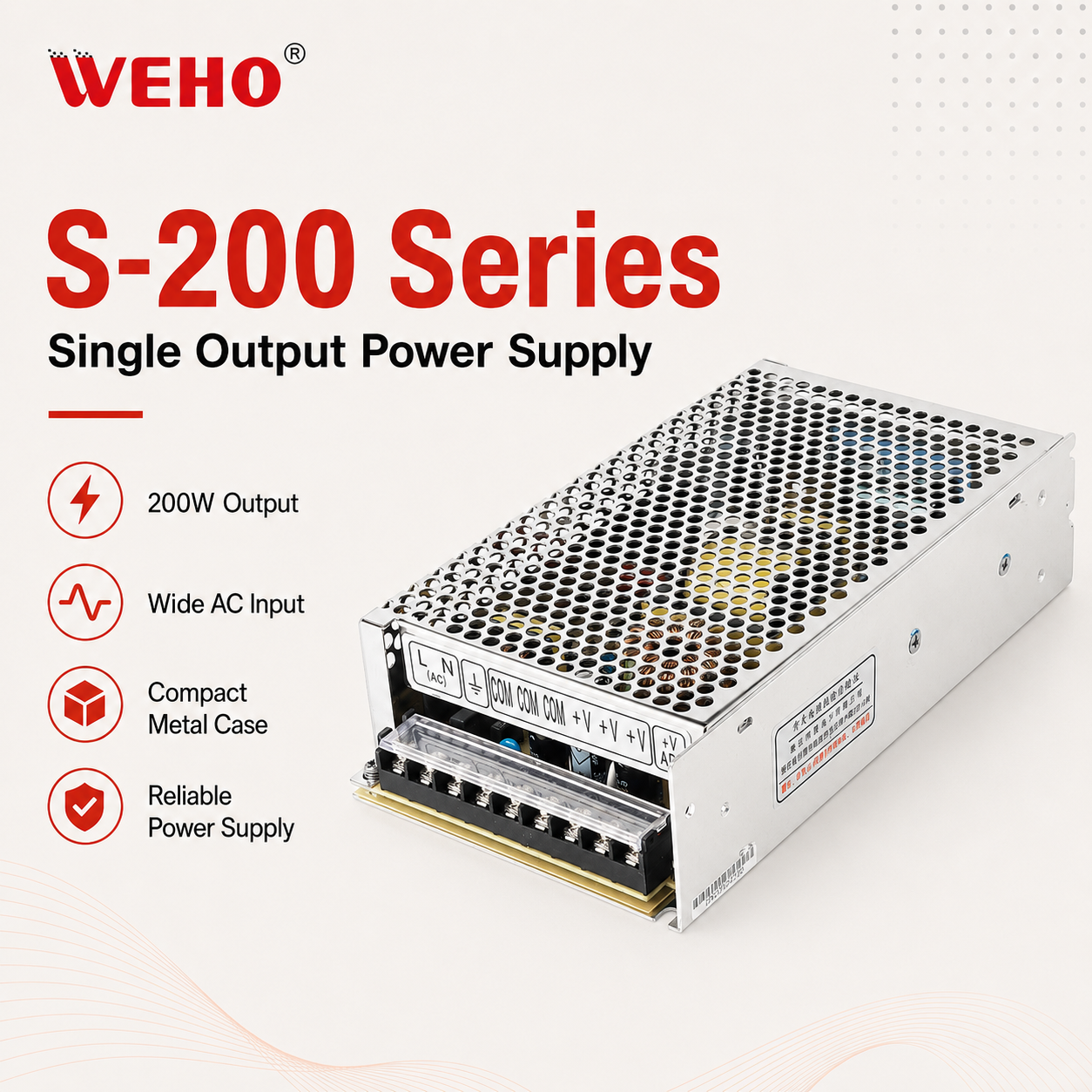
Under standard operational states, industrial SMPS modules such as our S-145 (145W) or S-200 (200W) units deliver tightly regulated 24V DC to mission-critical control rails while simultaneously feeding a precision charging circuit attached to sealed valve-regulated lead-acid (VRLA) or lithium iron phosphate (LiFePO4) energy cells. When utility mains failure occurs on the 110V/220V feed, integrated decoupling diodes and ultra-fast MOSFET switches transfer the full line load to the battery reserve within 0 to 4 milliseconds—well within the hold-up time of standard PLCs, industrial computers (IPCs), and field instrumentation.
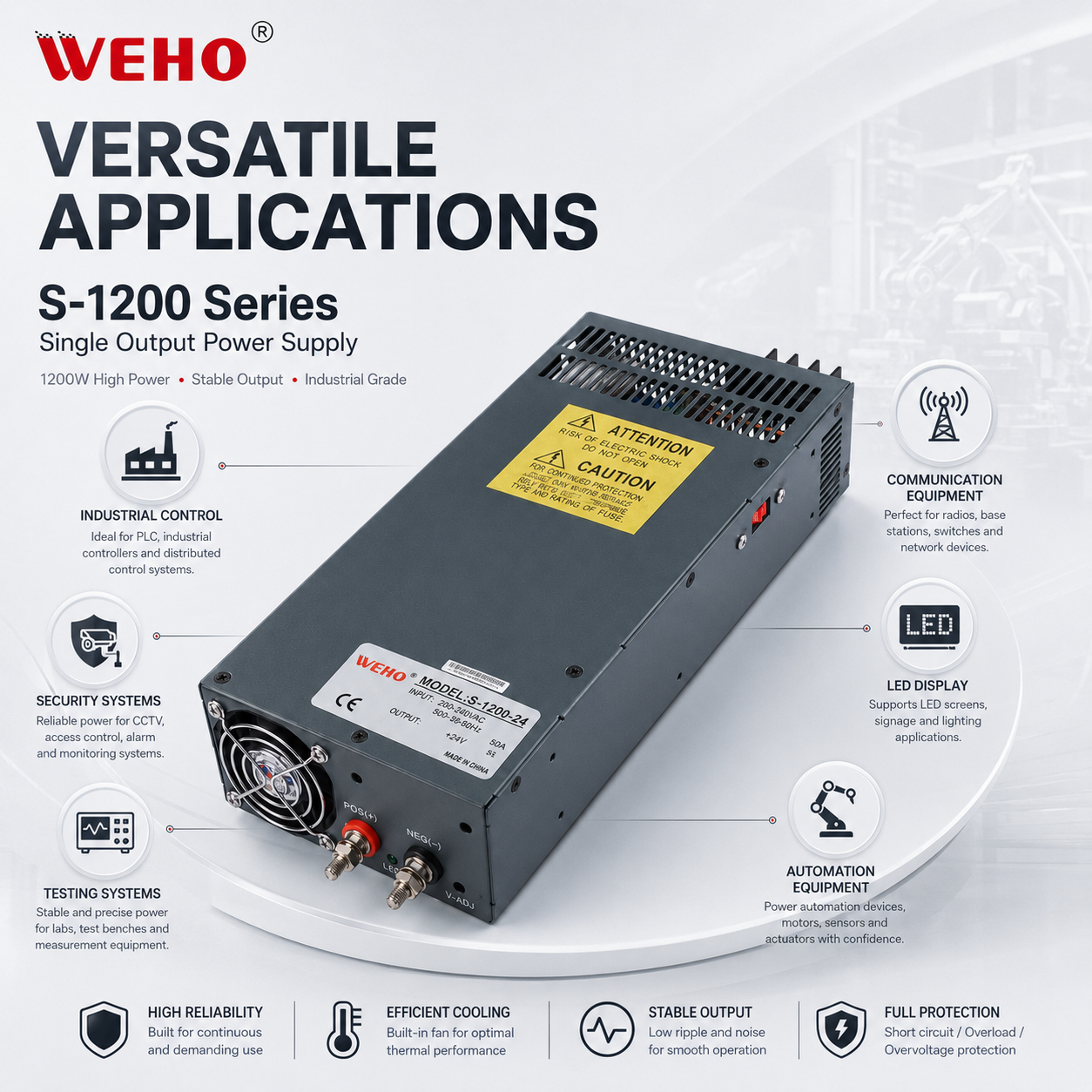
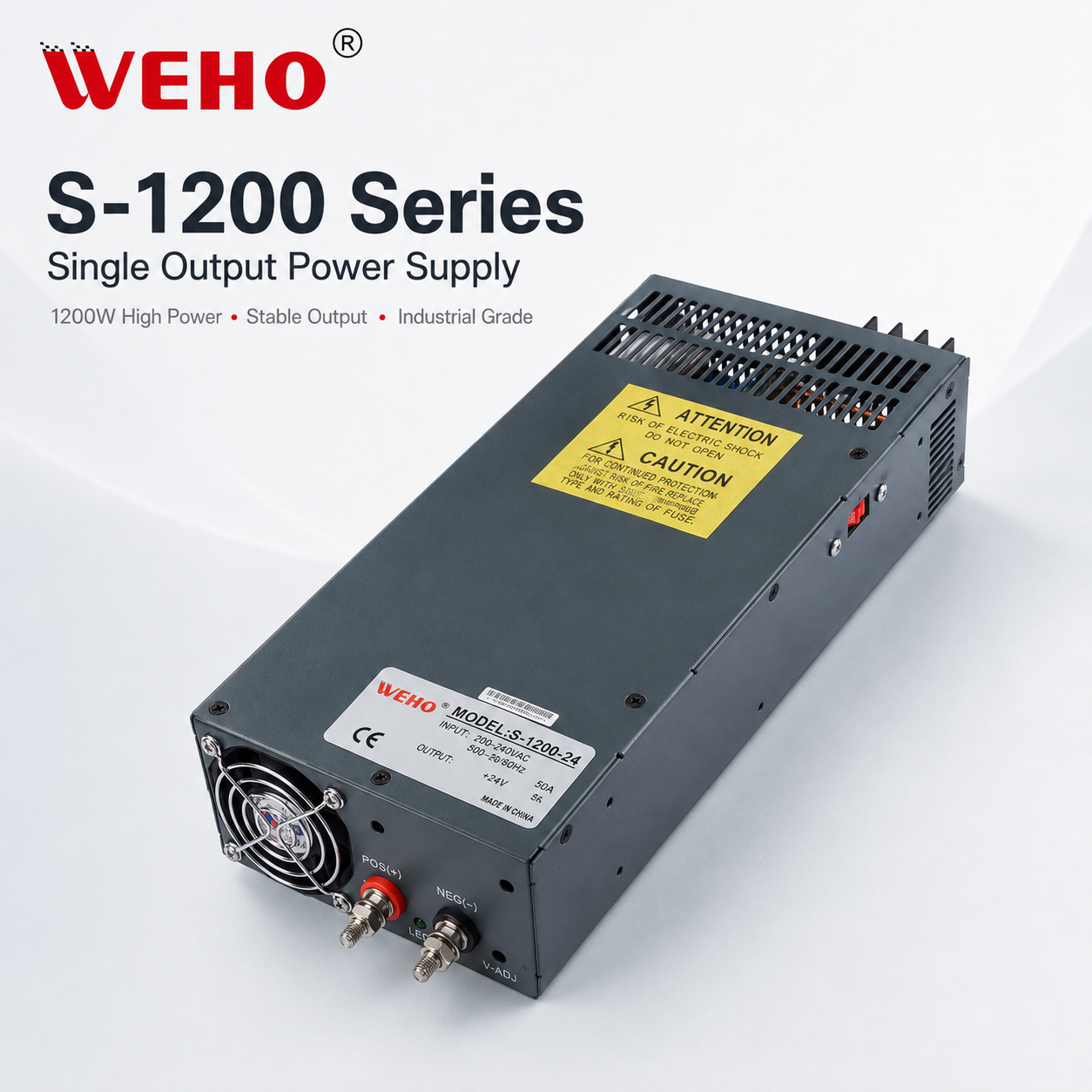
When selecting rectifiers for this integration, Columbus automation engineers must prioritize wide input tolerance (such as 85–264VAC full-range inputs), programmable current-limiting profiles, and high inrush margin. Our S-1200 series (available in 12V, 24V, and 48V topologies up to 100A) represents a heavy-duty workhorse capable of acting as both prime power driver and rapid battery replenishment charger for heavy warehouse automation, high-bay cranes, and telecom headends.
Field-Tested Deployments
Localized Application Scenarios Throughout Central Ohio
Rickenbacker Logistics & Automated Warehouses
Feeding 24V DC backup rails for conveyor diverters, high-speed barcode scanners, RFID tunnel antennas, and autonomous mobile robot (AMR) docking stations where power interruptions halt multi-million package distribution streams.
Silicon Heartland Cleanroom Tool Auxiliaries
Delivering ultra-low ripple (<100mVp-p) precision DC power to cleanroom chemical vapor deposition (CVD), etching, and laser metrology sensor monitoring boards requiring uninterruptible state logging.
Wexner Medical & Life Science Cold Storage
Maintaining uninterrupted power for cryogenic vaccine preservation control units, ultra-low temperature (ULT) freezers, and continuous biological specimen data transmission throughout the Ohio State healthcare network.
Supplying robust, high-temperature tolerant 24V float power to robotic welding heads, stamping safety curtains, and quality vision inspection rigs exposed to violent line transient spikes.
Edge Telemetry & Smart Columbus Infrastructure
Enclosed power units deployed inside outdoor NEMA-4X traffic and environmental enclosures, tolerating Ohio winters down to -20°C while floating secondary backup gel batteries.
Substation SCADA & Distributed Energy Buffers
Providing 48V DC float charging to switchgear trip coils, RTUs, and optical fiber multiplexers safeguarding grid reliability under sudden thunderstorm microbursts.
Hardware Engineering Specifications
Harlon SMPS Selection Matrix for Battery Backup Assemblies
Direct comparative parameters for system design engineers evaluating DC-UPS input feeds and battery charger integration.
Series Model
Rated Power
Nominal DC Voltages
Output Current
Input Voltage Matrix
Cooling Topology
Target Battery / Backup Role
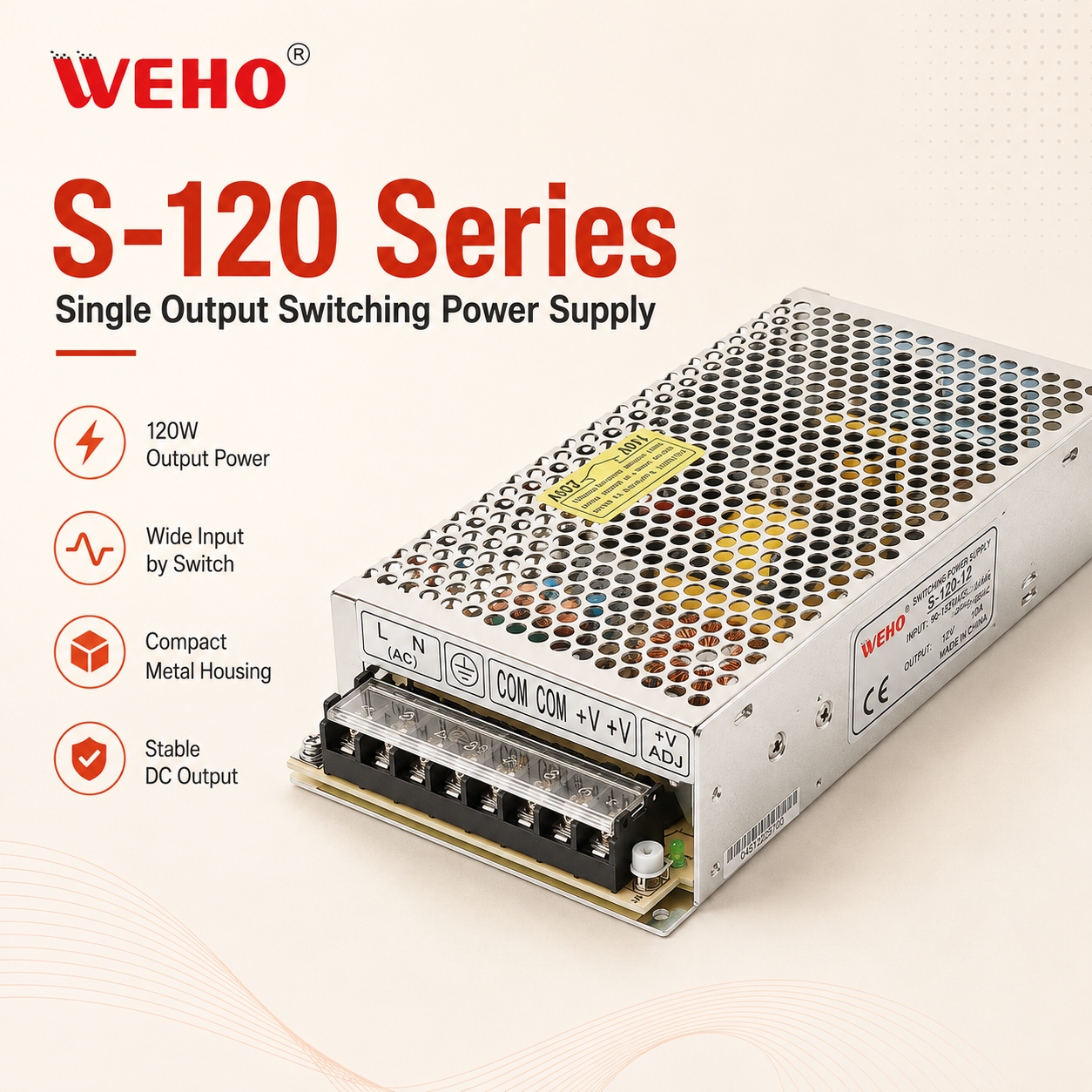
S-120-24
120W
24V (adj. ±10%)
5.0A
85–132VAC / 170–264VAC
Free-Air Convection
Auxiliary Float for Small PLC & HMI Panels
S-120-18
120W
18V (adj. ±10%)
6.7A
85–264VAC Full Range
Free-Air Convection
Specialty 14.4V–16V Custom Buffer Banks
S-145-24
145W
24V (adj. ±10%)
6.0A
90–264VAC / 127–370VDC
Free-Air Convection
Mid-Scale Control Enclosures with 7Ah VRLA
S-145-18
145W
18V (adj. ±10%)
8.0A
90–264VAC Universal
Free-Air Convection
Specialized Communications & RF Buffering
S-200-24
200W
24V (adj. ±10%)
8.5A
110V/220V Selectable
Chassis Perforated Airflow
Robotic Cells, Vision Systems, Dual 12Ah Cells
S-200-05
200W
5V (adj. ±5%)
40.0A
110V/220V Selectable
Chassis Perforated Airflow
Massive TTL Logic, FPGA Banks & Micro-UPS
S-1200-12
1200W
12V (adj. ±10%)
100.0A
180–260VAC Heavy Main
Internal Forced DC Fan
High-Current 12V Inverter Feeds & AGV Fast Charge
S-1200-48
1200W
48V (adj. ±10%)
25.0A
180–260VAC Heavy Main
Internal Forced DC Fan
Telecom Nodes, High-Voltage LiFePO4 Buffers
3. Central Ohio Power Trends: Decarbonization, Microgrids, and Stricter Uptime Mandates
As Central Ohio charges toward becoming the premier tech and logistics powerhouse of the American Midwest, power infrastructure expectations are experiencing fundamental shifts:
A. Microgrid and On-Site Renewable Adoption: Leading corporations in Dublin, Westerville, and Grove City are coupling grid power with rooftop solar installations and on-site fuel cell generation. This multi-source input architecture exposes downstream switching supplies to sudden line switching transients, phase jitter, and frequency hunting. Zhejiang Harlon’s power designs incorporate advanced multi-stage input filtering (MOV surge suppression, common-mode and differential-mode chokes) to ensure that incoming THD (Total Harmonic Distortion) does not translate into DC output ripples.
B. Semiconductor Corridor Tight-Tolerance Specifications: The arrival of advanced silicon manufacturing raises requirements for EMI compliance. Power supplies must comply rigorously with EN 55032 (CISPR32) Class B conducted emissions to prevent electromagnetic interference from leaking into adjacent nanometer-scale fabrication sensors and high-speed bus lines. Our factory test lab utilizes specialized EMI test receivers and fully shielded RF test rooms to validate every production design before export.
C. Cold-Weather Resilience and Thermal Cycling: Unlike coastal facilities, Central Ohio experiences severe continental climate fluctuations—temperatures regularly plunge to -15°F (-26°C) in deep winter polar vortex events and spike past 95°F (35°C) with oppressive humidity in peak summer. Power modules installed in external kiosks, loading docks, or unconditioned warehouse mezzanines face brutal thermal stress. Our switching supplies incorporate high-temperature rated (105°C) imported capacitors, reinforced conformal coating options, and cold-start circuitry guaranteed to initialize reliably from frozen cold states without output latch-up.
Manufacturing Authority
Why Columbus OEMs and System Builders Rely on Harlon Electronic
Headquartered in Zhejiang, China, Zhejiang Harlon Electronic Co., Ltd. has served international markets since 2007, operating an ISO 9001 certified and SGS on-site verified production facility.
10,000 m² Integrated Manufacturing Base
Over 10 specialized production lines housing automated high-speed SMT placement, automatic through-hole insertion, dual-wave soldering, and computer-controlled potting.
100% Full-Load High-Temp Burn-in
We do not batch-sample for reliability. Every single power supply undergoes elevated temperature loaded burn-in testing to eradicate infant mortality failure modes prior to packing.
In-House Comprehensive Test Laboratory
Equipped with lightning surge generators, digital storage oscilloscopes, DC electronic loads, hi-pot dielectric breakdown testers, and environmental thermal stress chambers.
OEM/ODM Customization for US Specs
Custom voltage trimming (e.g., 13.8V or 27.6V float targets), specialized wire harnesses, custom terminal blocks, and private label branding to match your machine enclosures.
Seamless North American Export Operations
18 years of uninterrupted direct export experience. Complete support for FOB, CIF, DDP, and multimodal air/ocean freight forwarding to Columbus inland ports and regional hubs.
Audited Traceability & Component Sourcing
Long-term strategic contracts with 31 qualified tier-1 component suppliers, ensuring stable silicon supply, uncompromised MTBF ratings, and zero counterfeit risk.
Procurement & Technical Inquiries
Frequently Asked Questions by Columbus Engineers & Buyers
Direct technical answers addressing system design, battery float charging, regional logistics, and certification standards.
Can your standard 24V SMPS units be used directly for battery float charging?
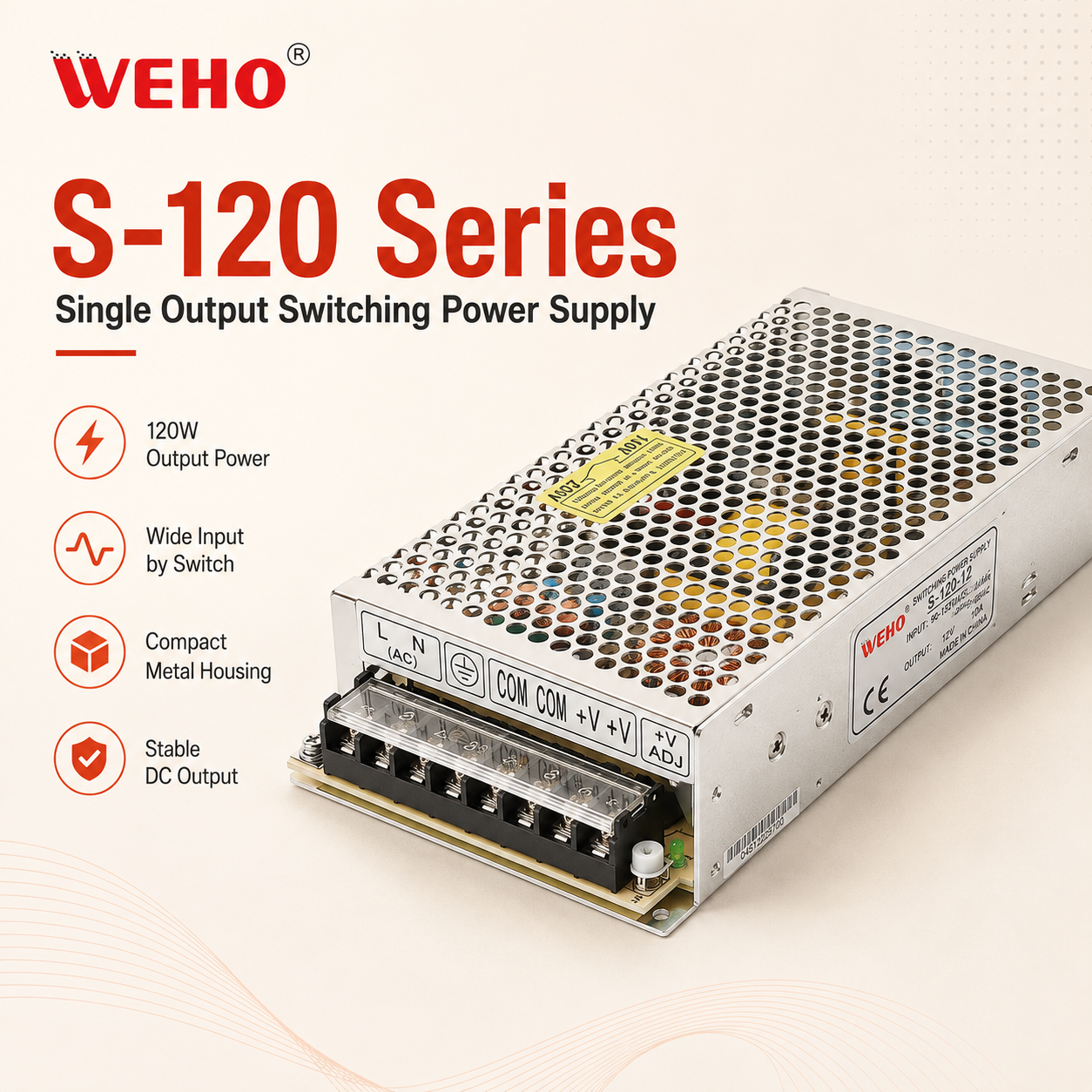
Yes. Our S-120, S-145, and S-200 series feature an onboard potentiometer allowing fine voltage adjustment (V-ADJ). For standard 24V AGM or gel lead-acid systems requiring a float charge between 27.2V and 27.6V, the output can be field-trimmed. When integrating directly with batteries, we recommend installing a series blocking diode or external DC-UPS controller module to safeguard the SMPS output stage against reverse battery back-feed during mains loss.
How do Harlon power supplies manage deep freeze restarts in Ohio winters?
All Harlon switching supplies utilize industrial-grade internal components with cold-start ratings extending down to -20°C (-4°F). Under extreme sub-zero conditions, high-grade NTC thermistors mitigate startup inrush without causing nuisance fuse blows. Once operational, the internal thermal dissipation of the power supply stabilizes the chassis operating environment within standard enclosure walls.
What is the typical freight transit lead time from your factory to Columbus?
For urgent prototype batches, engineering evaluations, or pre-production builds, express air courier (DHL, FedEx, UPS) reaches Columbus John Glenn International Airport (CMH) or Rickenbacker (LCK) within 4 to 7 business days. For volume sea freight, containers routing via US West Coast ports or East Coast gateways (followed by Norfolk Southern / CSX rail into Columbus inland intermodal terminals) average 24 to 32 days port-to-door.
Do your power supplies support parallel operation for N+1 redundancy?
Our higher-wattage units, particularly the S-1200 platform, can be configured for parallel or N+1 redundant architectures when paired with active ORing diode/MOSFET modules. This architecture ensures that if one power supply unit fails or undergoes scheduled maintenance, the secondary unit and the DC battery bank carry the full load without dropping the DC distribution bus for even a microsecond.
What certifications and quality documentation accompany export shipments?
Every shipment is backed by our ISO 9001 certified quality management system. Standard production models conform to CE (LVD/EMC), RoHS, and pertinent UL construction standards (clearances, creepage distances, high-voltage hi-pot insulation). We supply comprehensive factory test reports, Certificates of Conformance (CoC), and full batch burn-in validation records upon request for audit-sensitive installations.
Can you provide customized wire harnesses, DC output jacks, and private labels?
Absolutely. Over 65% of our international orders involve OEM or ODM customization. We support custom wire lengths, Molex/Phoenix contact terminal blocks, custom DC output voltages tailored to specialized battery chemistries (LiFePO4, LTO, NiCd), laser-etched customer serial numbers, and custom packaging for machine integration.
Upgrade Your Industrial DC Backup Reliability Today
Whether you are engineering a high-speed sorting hub in Rickenbacker, retrofitting medical cold chain controls, or designing high-uptime automated cells along the Silicon Heartland corridor, our engineering team is ready to review your schematics and power budgets.
 Deutsch
 Español
 Français
 Português
 Italiano
 Русский
 العربية
 Türkçe